Nigerian Army troops have recovered a large cache of arms and ammunition from the Islamic State of the West African Province (ISWAP) insurgents in Sambisa Forest, Borno State.
The discovery was made during the ongoing counter-terrorist operation, Operation Desert Sanity II, when troops invaded the Ukuba camp on May 13.
The armory contained many weapons and ammunition, including anti-aircraft guns, AK 47 rifles, and Improvised Explosive Devices (IEDs) making materials.
This discovery comes almost two weeks after the troops raided the same camp and recovered several weapons and a Hilux vehicle mounted with an Anti-Aircraft Gun.
Nigerian Army troops discovered a cache of weapons concealed in hidden dug pits by the terrorist group ISWAP, according to intelligence sources.
Experts revealed that the recovered weapons included several variants of Rocket Propelled Grenade Tubes, SMG Rifle, Double Barrel guns, 50 hand grenade bombs, 5 SMK bombs, and other dangerous weapons. The troops also recovered Non-electric detonators, IEDs-making materials, prepared IEDs, and canister bombs.
One terrorist was neutralized, and one AK47 rifle and other items were recovered. Troops successfully evacuated the arms, and their morale and fighting spirit were boosted.
The Nigerian Army’s counter-terrorist operations have weakened the militants’ ability to carry out their activities. Operation Desert-lake-mountain II, which started on April 27, has steadily progressed in the Sambisa-Timbuktu Triangle and Lake Chad shores.
Troops have killed scores of militants and forced others to flee. Recent successful operations have cleared terrorist hideouts, including Garno, Alafa, Alafa D, Garin Doctor, Njumia, Izzah, Farisu, Somalia, Ukuba, Garin Glucose, Garin Ba’aba, and Bula Abu Amir, dealing a massive blow to their activities.
The recovered cache of munitions
The Nigerian Army’s successful recovery of a large cache of arms and ammunition from ISWAP insurgents in Sambisa Forest, plus clearance of several terrorist hideouts, has boosted troops’ morale and fighting spirit.
The Army’s commitment to ensuring citizens’ safety and security is evident. These victories are commendable, and the people of Nigeria appreciate the Army’s dedication, bravery, and unwavering commitment to ending insurgency in the country.
Reporting on the same development earlier, Zagazola Makama, a popular commentator on the ongoing insecurity in the Lake Chad region, said Nigeria troops have been “making steady inroads as ground and air support continue to sustain pressure on the terrorists.
“The troops have killed scores of militants, while many others have been forced to flee.”
A man can succeed at almost anything for which he has unlimited enthusiasm
~ Charles Schwab
By Abdulkareem Haruna
Are you wondering what your career path should be? It’s important to have an idea of where you want to go in life, and what you want to do.
Your career path is the journey you take to reach your professional goals, and it can be a key factor in your overall happiness and fulfillment.
As a journalist, I can tell you that my career path has been an exciting and challenging one. From a young age, I was inspired by the stories I heard on BBC’s Julian Marshall program, which I listened to on a Toshiba transistor radio my grand father handed me.
That early exposure to journalism sparked a passion within me that led me to study mass communication and English language in college.
After graduation, I was offered a civil service job, but I knew that my heart was in journalism. So, I turned down the job and started working as a cub reporter for a local newspaper.
It was a tough job, but I loved every minute of it. I learned how to find and tell stories, and I honed my writing skills.
That is not to say journalism in Nigeria doesn’t have its downside. Poor remuneration or the absence of it has killed many aspiring and spirited journalists. Yes. It is no news in Nigeria that work without pay has been a major signature of the pen profession.
For folks like us whose inherent inspiration wasn’t about the money but the zeal to tell that story, we keep working and parting ways with employers who see their ID cards as a meal ticket for reporters.
Over time, I worked my way up the ranks to become a senior reporter and storyteller. I covered everything from local events to international news, and I loved the challenge of finding the human angle in every story.
But my big plan was always to own my own online news platform. I wanted to have the freedom to report on the stories that matter to me and to mentor young journalists who share my passion for storytelling. So, I took the leap and started my own online news platform.
It hasn’t been easy, but it has been incredibly rewarding. I’m able to report on the stories that matter to me, and I’m able to provide a platform for young journalists to hone their skills and tell their own stories.
If you’re considering a career in journalism, I would encourage you to follow your passion and pursue your dreams. It’s a challenging career, but it’s also incredibly rewarding. And remember, your career path doesn’t have to be a straight line. It’s okay to pivot and try new things along the way.
So, what’s your career path? Whatever it is, I encourage you to dream big and work hard to make it a reality. With passion, dedication, and hard work, anything is possible.
Haruna, a seasoned journalist, writes from Maidiguri as our guest-writer
Troops of Operation Hadin Kai, in conjunction with the troops of Sector 4 of the Multi-National Joint Task Force (MNJTF), killed several terrorists belonging to the Islamic State of West Africa Province (ISWAP) during a thwarted attack in the North East of Arege, in Abadam Local Government Area of Borno State.
According to intelligence sources, the ISWAP militants attempted to infiltrate the advancing troops’ harbor using a Vehicle-Borne Improvised Explosive Device (VBIED) on May 10, 2023, at about 10:19 a.m.
Scene of the EID explosion
The terrorists encountered fierce resistance as the troops unleashed heavy firepower, taking out the approaching VBIED 300 meters from them.
The troops, with support from the Air Task Force, neutralized additional terrorists, while others were forced to flee.
Zagazola Makama, a popularncommentator y Counter-Insurgency Expert and Security Analyst in the Lake Chad region, confirmed the successful operation, highlighting the troops’ bravery and tactical expertise.
The operation’s success dealt a “significant blow to the ISWAP militants and bolstered the troops’ morale.”
Back in September 2009, many Nigerians, particularly Muslims, were left astounded when a man contradicted the date declared by the Sultanate of Sokoto for observing the end of Ramadan moon – and the man’s alternative prediction turned out to be correct.
The man in question was none other than Mr Salisu Zubairu, who was convinced that the 2009 edition of Ramadan would last for 29 days instead of the previously announced 30 days by the country’s Supreme Council on Islamic Affairs. And true to his word, that was exactly what happened.
While the Supreme Council on Islamic Affairs probably relied on human judgment, Mr Zubairu relied on science. He used the calculations from his revolutionary telescopic invention, the ‘4x60mm Zubairu Calibrated Telescope,’ to accurately predict the end of Ramadan.
Mr Zubairu’s groundbreaking invention offered a fresh perspective on traditional methods that relied on human judgment, which could sometimes be susceptible to errors. His use of science and technology showed how a well-calibrated instrument could provide more reliable and accurate results.
Mr Zubairu’s achievement highlighted the importance of using science and technology to complement traditional methods to achieve greater accuracy and precision in various fields. His contribution to the scientific community will undoubtedly inspire future generations of scientists and innovators in Nigeria and beyond.
Although Mr Zubairu’s counter-views to the Sultanate’s declarations were offensive to many good Muslims who revered the Sultanate, they were unaware of the extensive research and development he had conducted over many years. He used his technology to arrive at authoritative conclusions that challenged traditional observation methods.
Mr Zubairu’s Book Nowsold out on Amazon
Mr Zubairu’s ‘4x60mm Zubairu Calibrated Telescope’ was instrumental in fabricating a rare kind of Lunar Tracking Clocks that he used to prove that one full circle of the lunar movement against the Gregorian calendar completes in 33 years. His findings were original and groundbreaking.
Explaining his discovery, Mr Zubairu said, “I was able to discover perfectly that in 33 years, the days of the lunar movement Mrifted gradually and returned to where it started.”
While Mr Zubairu’s findings were met with scepticism at first, his groundbreaking research and technological advancements proved to be a turning point in the way lunar movements were observed and predicted. His discovery has paved the way for more accurate and reliable predictions of lunar movements. It has inspired a new generation of scientists to explore the possibilities of using technology to complement traditional observation methods.
Mr Zubairu’s discovery has significant implications for the study of lunar movements. He says, “This discovery signifies that the lunar movement against the earth, even if they scatter in their trajectory, always returns to the same position after 33 years. I’ve gotten so many findings in my research on the lunar movements, which are novel and original. And this has never been researched anywhere in the world.”
Mr Zubairu’s groundbreaking research on lunar movements has revealed a harmonic Mrift in lunar dates against the Gregorian calendar. His findings challenge traditional observation methods and have paved the way for more accurate and reliable predictions of lunar movements.
The technologist’s work has been recognised internationally. He explained, “I sent my findings to an international journal for a review, which came back as original work; ‘no recent work was sighted at that time’.”
His research and technological advancements have transformed how lunar movements are observed and predicted. His discovery has inspired a new generation of scientists to explore the possibilities of using technology to complement traditional observation methods. His contribution to the scientific community will undoubtedly have a lasting impact.
Mr Zubairu Salihu, a multi-talented Nigerian scientist and technologist from Adamawa state, has made significant contributions to the field of lunar telescopy. Based at the University of Maiduguri, he discovered a discrepancy between the lunar and Gregorian calendars that causes the lunar calendar to Mrift over time. This discrepancy, known as harmonic Mrift, has important implications for the Islamic calendar, particularly for the timing of Ramadan.
Mr Zubairu is a senior technician at the Physics Department and an active researcher who has published several papers in international scientific journals. His work on the lunar calendar has garnered widespread attention and media coverage.
His groundbreaking research has shed light on the discrepancies in the lunar calendar and has paved the way for more accurate predictions of lunar movements. His contributions to the scientific community have been invaluable. He explained, “I have always been passionate about science and technology, and I am glad that my work on the lunar calendar has been recognised internationally.”
Mr Zubairu’s achievements have inspired a new generation of scientists and technologists in Nigeria and beyond, and his legacy will undoubtedly have a lasting impact on the field of lunar telescopy.
The Islamic calendar is a lunar calendar that relies on the moon’s cycles to determine religious observances. However, because the lunar month is shorter than the solar month, the Islamic calendar doesn’t align with the Gregorian calendar. To address this difference, the Umm al-Qura calendar uses astronomical calculations instead of actual moon sightings and is utilised by the Saudi Arabian government to determine Islamic holiday dates.
Despite the Umm al-Qura calendar’s use of astronomical calculations, it still experiences some drift over time. Mr Salihu’s research reveals a secondary Mrift in the lunar calendar caused by the harmonic interaction between the moon and the Earth. Although smaller than the primary Mrift, the secondary Mrift is still significant over extended periods.
Mr Zubairu’s discovery has significant implications for the Islamic calendar, particularly in determining the timing of Ramadan, the month of fasting in Islam, determined by the sighting of the new moon. Because the lunar and solar calendars do not align, the start of Ramadan can vary up to two days annually, causing confusion and uncertainty for Muslims worldwide who rely on the lunar calendar to determine religious ritual timing.
The UNIMAID wizkid’s research on harmonic drift offers a potential solution to the problem of the lunar calendar’s drift. By accounting for the secondary drift, it is possible to evaluate the lunar calendar using a scientific approach. This involves determining the possible first lunar location above the western horizon approximately 30 minutes after sunset, which is the reference location and time.
Mr Zubairu’s recently published research, “Scientific Observation of Harmonic Drift in Lunar Dates Against Gregorian Calendar,” available on Amazon, reveals that existing lunar calendars are primarily based on numerical differences resulting from the discrepancy between the Islamic and Gregorian calendars. Mr Zubairu’s work on harmonic Drift provides a more accurate and scientific approach to evaluating the lunar calendar.
In the published project, Zubairu, an Ophthalmic Optics graduate from Temple University Philadelphia, emphasized that the “Harmonic Drift in lunar dates against the Gregorian calendar is noticed as a secondary Drift and possible cause of the discrepancy in the lunar calendar.”
In his published project, Zunairu, a graduate of Temple University Philadelphia in Ophthalmic Optics, highlights the importance of the “harmonic Drift in lunar dates against the Gregorian calendar.” This secondary Drift is a possible cause of the discrepancy in the lunar calendar. It has aided in developing a more reliable lunar calendar capable of projecting dates for extended periods without differences.
Zubairu hopes his published work will excite individuals and organisations interested in astronomy, including educational institutions and research centres.
Who Is Mr Zubairu Salisu?
The 65-year-old technologist, Zubairu uniquely understands the harmonic Drift in the lunar first-of-its-kind Gregorian Calendar. However, this is not his first discovery. He has also fabricated binoculars, sniper lenses, a first-of-its-kind lunar-tracking clock, and a space observatory using locally sourced materials. Zubairu’s expertise in lunar reading has made him Nigeria’s walking encyclopedia in lunar tracking. He has multiple talents that go beyond his original field of Ophthalmic Optics, including manufacturing various lenses for military and space-related viewing.
In 1988, Zubairu, then 29 years old, gained recognition for creating binoculars using locally sourced materials. The Federal Ministry of Science took notice and invited him to present before a presidential brain Drain committee on science. Journalist Nosa Igiebor wrote about Zubairu’s invention in the May 1988 edition of Newswatch magazine, stating that he “has made a pair of binoculars, magnifying glasses, a convex mirror and a microscope. And now Zubairu has designed an astronomical telescope. But then he did not have the facilities to make the device.” Despite his achievements, Zubairu could not obtain financial backing or sponsorship from the Nigerian government to pursue his Dream.
“I have visited the Project Development Agency (PRODA), Enugu, and the Federal Ministry of Science and Technology. But they kept asking me to come back again,” said Mr Zubairu, according to the Newswatch magazine. Following the publication, Zubairu was invited to present his work at the Federal Ministry of Science and Technology. He met Professor Madu Mezia, a renowned physics professor and Special Assistant to the then Minister of Science and Technology, Emmanuel Imovon. During the Babangida regime, Zubairu could attend meetings with Professor Alele Williams as part of a federal government science committee named ‘the presidential Brain Drain Committee.’
Zubairu presented his work before the committee and impressed everyone in attendance. Professor Awele Madu Mezia was particularly impressed and shortlisted him to be a member of the Sheda Science Village in Kwali, Abuja, where indigenous scientists and inventors develop their skills. However, Zubairu did not receive an official letter to report to the centre because it lacked equipment for optical science and instead only invited talents in engineering.
“I was among the first list of persons to be shortlisted to be at Sheda Science Complex, from where we were supposed to travel to Germany for some training. But unfortunately, I did not get the official invite; so others went to Germany, and I was never called again.
The Nigerian government failed to support Zubairu’s skills even after 35 years since he created these scientific tools, which Nigeria still imports from abroad. Zubairu, now 65, believes it is not too late for the government to support his project, but he also worries about time running out.
Zubairu currently works as a Lead Technologist at the Department of Physics at the University of Maiduguri. He obtained his first degree in Ophthalmic Optics from Temple University in Philadelphia and returned to Nigeria in the early ’80s to work at Isijola Optical Service in Lagos. In 1992, he declined an offer to work as a lead Ophthalmic Optician at the University of Maiduguri Teaching Hospital. Instead, he was appointed as a Lead technologist in the physics department at the same university.
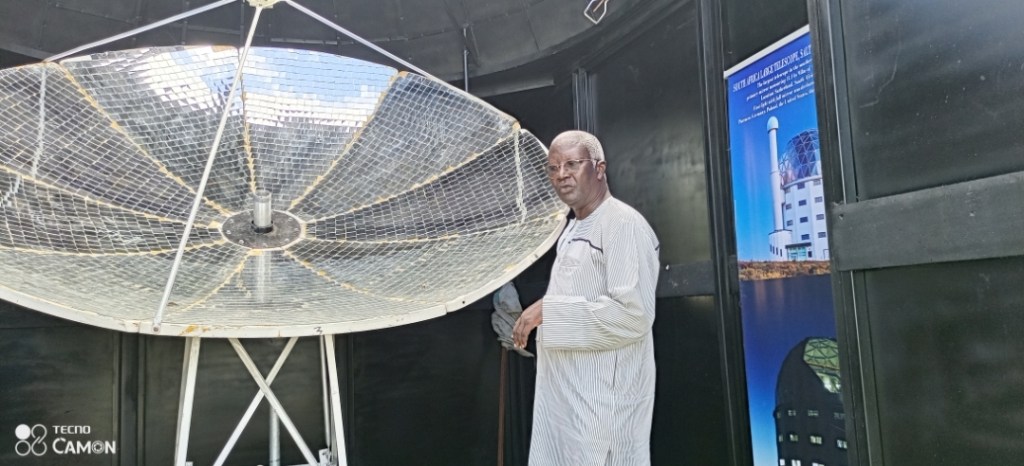
Zubairu at the site of one of his most ambitious projects – space observatory
Mr Zubairu leverages his position in the physics laboratory to continue his research and development in optical science and telescopic lenses, leading to the successful creation of 4x40mm Binoculars. Despite his achievements, Nigeria and other African countries cannot produce binoculars, a technical knowledge Zubairu demonstrated over three decades ago.
Zubairu finds it ironic that Nigeria still cannot produce basic instruments like binoculars, telescopes, and sniper lenses, despite how easy it is to do so. He remarked, “It is funny to note that until now, Nigeria does not produce basic instruments like binoculars, telescopes, and sniper lenses, even though it is very easy to do so.”
Mr Zubairu refused to let the Nigerian government’s cold attitude dampen his inner fires of creativity and research and continued exploring various astronomy fields using his locally fabricated lenses. He further improved his first binoculars, the 4x40mm ZB, and sent a letter to the then Chief of Army Staff, General Alwali Kazir. Impressed by his work, General Kazir invited him to present it before an army council at the Army headquarters.
During the presentation, Mr Zubairu showcased his capabilities and spoke about infrared technology. He explained the core components of infrared and how it could support the military in tackling the challenges of fighting at night. He further highlighted that they had the idea and skills to develop their infrared facility for rifles, binoculars, flying jets, and other long-range targeting weapons.
According to Mr Zubairu, the army council approved his proposal, and some funds were released to start work on night viewing instruments, including the infrared and light intensifier. However, with the appointment of General Ishaya Bamaiyi as the new Chief of Army Staff, the project was terminated, as he did not appreciate its significance.
Fortunately, General TL Ashei, the Chief of Army Policy and Plans at the time believed in the project and gave Mr. Zubairu a letter of referral to the Federal Ministry of Science and Technology, ensuring that the project did not die naturally. The late General Sam Momah, the Minister of Science and Technology at the time, was interested in the project and directed Mr Zubairu to proceed to the Science Equipment Development Institute (SEDI) in Enugu. He received a recommendation from the institution to the minister on the need to sponsor the project.”
After a few months, Mr Zubairu received approval for the project, and a cheque was issued. However, the cheque was made to SEDI, not Zubairu, with a cover letter stating that the funds were meant for him and not the institution. Mr Zubairu planned to work through NASENI, a federal government agency that oversees all centres involved in engineering projects.
Despite receiving the funds, Mr Zubairu faced several challenges during the project’s development. He was frustrated by SEDI’s lack of support. They did not engineer or produce the body for him, despite him designing the infrared device and light intensifiers and acquiring all the required lenses. Consequently, he wrote a report to inform the ministry of the setback, but they have not responded since then.
Mr Zubairu returned to his work at the University of Maiduguri, designing and fabricating prototypes of refracting astronomical telescopes and sniper telescopes for rifles. In 2004, he was introduced to Major General Edo Wande, the Director-General of the Defence Industry Company of Nigeria (DICON), who invited him to design and construct a prototype of a C2-sight for an 88mm mortar gun. Although Mr Zubairu submitted the prototype within four months, no further development occurred. His work was later featured at the 2004 NUC research exhibition in Abuja, and some military generals appreciated his work. However, upon returning to Maiduguri, he encountered military problems.
“After the exhibition, I returned to Maiduguri and was sought out by military intelligence operatives who had received a signal from their Director MI about my project. They wanted to see my snipers’ prototypes and had initially intended to harass me. However, after I visited the barracks and explained that universities worldwide teach all kinds of gadgets, military and civil, they became interested. Unfortunately, the General who had taken an interest in my work retired, and nothing came of it.
A shift to lunar telescoping
Mr Zubairu concluded that the Nigerian military was not interested in his work, despite his efforts to show them how his projects could help solve their non-ballistic hardware needs. Frustrated, he put his quest to design sniper rifle telescopes aside and shifted his focus to creating telescopes for lunar movement instead. His experience with the military taught him that critical projects often depend on the interest or passion of a single individual. Once that person is no longer in charge, the project dies because there is no institutional interest or framework to sustain it, according to Mr Zubairu.
Uncertain of his next steps, Mr Zubairu shifted his research focus toward designing telescopes for lunar movements. Through his work, he was able to calibrate a telescope that accurately monitors the moon’s movements, allowing him to create a calendar based on the Islamic lunar cycle.
After nine years of painstaking work, he could tabulate the calendar for a 33-year cycle. He had to enter each suggestion into the columns one by one manually, and by the time he reached the 33rd year, the suggestion returned exactly where he had started – this was the furthest he had gone in lunar research.
According to Mr Zubairu, his findings are original, which is why the Saudi Arabian journal, Astronomic, was interested in publishing them. Despite not receiving recognition in his home country, Mr Zubairu’s book is now available on Amazon’s online marketplace.
In the future, this newspaper will explore another ambitious project by Mr Zubairu in space observation science. This project is currently in progress at the UNIMAID Campus.
The Nigerien army said it has intercepted around 1,400 Boko Haram militants who were fleeing to Niger after clashing with rival jihadist group, the Islamic State West Africa Province (ISWAP), with around 30 of them being killed.
The army caught the followers, mostly women and children, who were trying to reach the marshlands of Lake Chad, known to be a bolthole for jihadists.
The movement was first detected on March 7th, while walking along the Kamadougou Yoge River, which marks the border between Nigeria and Niger.
Six days later, Nigerien troops in a regional anti-jihadist task force killed 20 militants and arrested 83 others.
The southeastern region of Diffa, which has borne the brunt of jihadist attacks over the years, has been relatively calm since the beginning of 2023.
However, rebels have planted landmines that continue to claim lives.
There is a growing sense of unease among the current cabinet members in the Borno state government ahead of the compulsory end-of-term cabinet dissolution expected to be carried out by Governor Babagana Zulum before May 29th.
Rumours swirl that the governor, currently holidaying abroad, may soon announce the dissolution. But some people doubt if the second tenure cabinet would ever be differ from the current one.
The governor had, at the beginning of his first term, in 2019 promised to change his cabinet annually, to allow many other politicians who worked for the party during the 2019 elections to be carried along by his government.
However, despite this promise, Governor Zulum was unable to carry out his promise as he retained the cabinet, except for some little shakeups, throughout his first term of four years.
This has, no doubt, led to growing dissatisfaction among some party members, who feel that they have been excluded from the political process.
There is no questions that Governor Zulum has received widespread recognition and praise for his notable achievements over the last three years and eleven months. Nevertheless, some party members feel discontented as the Governor’s failure to execute his commitment to annual cabinet reshuffles may have deprived the government of opportunities for new and more innovative ideas.
Some of the outgoing commissioners are reportedly already lobbying to be carried along in the second and final term of Governor Zulum. However, it remains to be seen whether the governor will heed their requests or opt for a complete overhaul of his cabinet.
A top insider of the Zulum cabinet who spoke to this writer off-record hinted that the governor would “shock many people” by the time he took the oath of office on May 29.
“Everyone would answer his father’s name in the second term because there may be a lot of surprises,” the source said.
Across the board, the looming cabinet dissolution and the attendant high-wired lobbying underscores the challenges to be faced by Governor Zulum in managing the diverse interests of his party members and delivering on his promises to the people of Borno State.
As the governor prepares to commence his second term in office on May 29,/many will be watching closely to see how he navigates these complex political waters and steers the state towards progress and development as projected in his 25-year development plan and ten years action plan of Borno state.
Abdulkareem is our guest writer who is based in Maiduguri
France has pledged a €6.9 million aid package to provide life-saving assistance to two million people facing malnutrition and food insecurity in the North East of Nigeria.
Emmanuelle Blatmann, the French Ambassador to Nigeria, announced the package during her visit to the Muna IDP Camp clinic in Borno State.
The funds will be used to address severe acute malnutrition and food shortages in the region through the World Food Programme.
Ambassador Blatmann stressed the importance of the aid package in providing relief to the most vulnerable populations in the area. This contribution is a significant step towards addressing the ongoing humanitarian crisis in the North East of Nigeria, where millions have been displaced.
The Ambassador expressed concern for malnourished children during her visit to the Muna IDP Camp clinic in Borno State. She reiterated France’s commitment to addressing the humanitarian crisis in the region and providing life-saving assistance to those in need.
In addition to the €6.9 million aid package, Ambassador Blatmann revealed that France had financed 28 projects worth €21 million in the region over the last three years, reaching over one million people and addressing various needs such as food security and health.
Mothers and their malnourished child at a WFP treatment clinic in Muna IDP camp
Ambassador Blatmann stressed the importance of a comprehensive approach to addressing the multiple drivers of the conflict in the region, including hunger, insecurity, and climate change. She pledged France’s continued investment in the area to improve the lives of vulnerable people.
The Ambassador also highlighted an initiative by France, the World Food Programme, and other partners to mitigate the impact of the crisis in Ukraine on access to food for vulnerable and displaced people in Borno State. This initiative showcases France’s commitment to working with international partners to address the humanitarian crisis in the region.
Blatmann o has refuted claims of donor fatigue and decreasing humanitarian assistance by announcing their increased contributions to Nigeria.
“We often hear about donor fatigue and humanitarian assistance going down, so I am here to prove that for France, it is the opposite,” she said.
She said France had already front-loaded three million euros to the World Food Programme to address hunger and malnutrition in the region.
Falmata, a mother of twins, said her children were treated for moderate malnourishment at the clinic operated by WFP
“This contribution showcases France’s commitment to helping the affected population and collaborating with the government and UN agencies. The funding will support those in need and demonstrate solidarity with the region.
According to David Stevenson, the WFP Country Director, the organisation will aid 2.1 million people under the humanitarian response plan.
“The plan focuses on children, providing food supplements to the mothers of malnourished children and helping nursing mothers learn nutrition techniques,” he said.
Stevenson emphasised the WFP’s dedication to meeting the needs of conflict victims in the North East. The collaboration between France, the WFP, and other partners is crucial in tackling the region’s humanitarian crisis and giving life-saving support to those affected.
The tenure of the outgoing Managing Director of the North East Development Commission (NEDC), Mohammed Goni Alkali, has come to an end, and it’s remarkable how time flies.
Mr Alkali and his team of board members will on Sunday, March 8, 2023 serve their last as the highest decision making officials of the Commission.
Although expected, Alkali’s exit felt sudden, as his tenure was a mixed bag.
During his time, the agency made significant strides in addressing the humanitarian crisis caused by the Boko Haram insurgency in the North East region of Nigeria.
Observers agree that the new commission made massive strides over the past four years.
While the agency made significant strides, criticisms of mismanagement and corruption have also been raised at some points. . However, none of these allegations have been verified with concrete evidence.”
As the new board takes over, Nigerians will be looking for a leadership team that is committed to transparency and accountability, building on the gains made by the outgoing MD, and ensuring sustainable development and peace in the region.
The success of the new board of the NEDC will be judged on its ability to deliver on these expectations.
At least two members of the Islamic State of West Africa Province (ISWAP) were killed and several others were injured in a vehicle accident on Tuesday evening along the highways leading to the Sambisa forest, sources said.
Zagazola Makama, a popular counterinsurgency commentator in the Lake Chad region has also reported this via his verified twitter handle.
BNB Online learnt that the accident involved a Toyota Hilux truck carrying ISWAP terrorists in Galmasku village which was moving at a neck breaking speed, apparently to escape Nigerian troops onslaught
One of the tyres of the over speeding truck exploded and caused the vehicle to overturn repeatedly.
Eyewitnesses said the ISWAP fighters immediately evacuated the dead and injured to a nearby village, Shettima Abor.
The deputy governor of Borno state, Usman Kadafur, has identified poverty and single-minded allegiance to religious clerics by the uneducated populace as major contributing factors to the Boko Haram-induced insecurity in the region.
Kadafur explained that the people’s unreasonable reliance on some of the skewed teachings of clerics, without exposure to opposing views or access to alternative sources of knowledge, has fueled extremism in the state.
He noted that the majority of individuals in rural areas of Borno lack basic education, leaving them vulnerable to skewed religious teachings propagated by traditional clerics.
Kadafur’s statements highlight the urgent need for increased access to education as a means of promoting religious tolerance and countering extremist ideologies and even globalization.
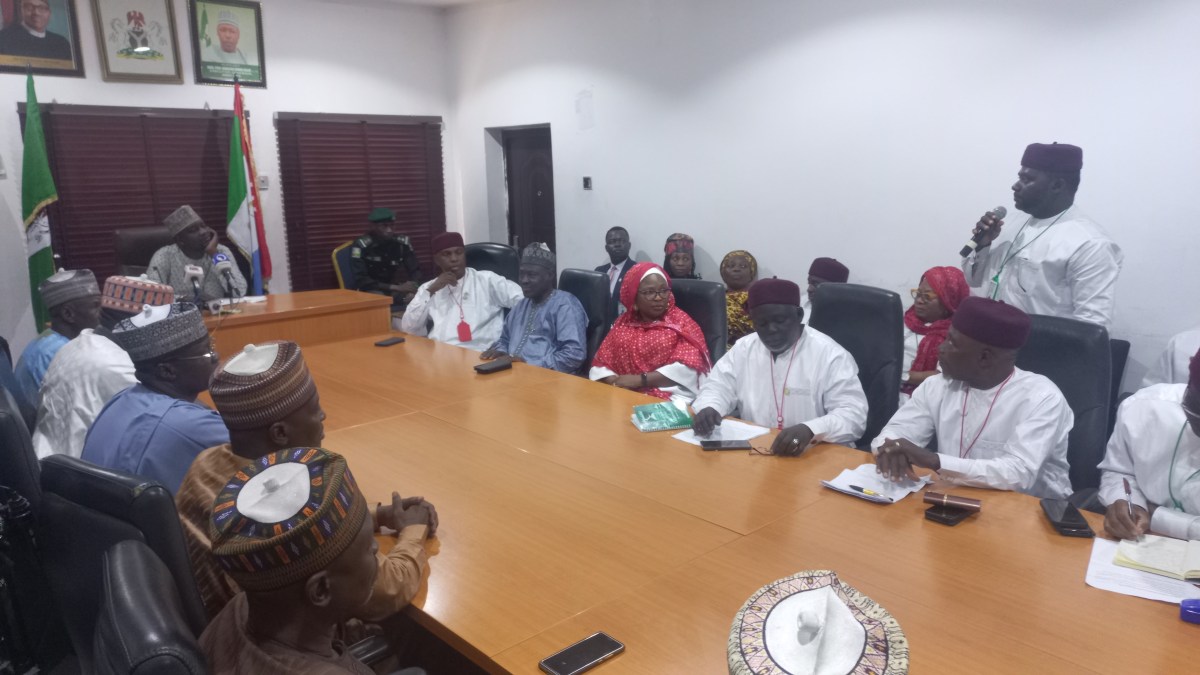
The deputy governor made this comment while hosting executive intelligence management course (EIMC) from the Nigeria Institute for Security Studies, syndicate-3, who were in the state on a study tour.
Visiting members of syndicate-3, who are among 89 participants in an ongoing ten-month EIMC, were welcomed to the state by Mr. Kadafur.
The deputy governor praised the group’s visit, while hoping that their tour of assignment in the state would bring about solutions that would further supports the state’s post-insurgency recovery programme. He also highlighted the state government’s investment in the security sector over the past four years, which he said has resulted in the attainment of relative peace in the region.
Kadafur emphasized two key achievements of the state government: the formulation of a 25-year development plan and a ten-year strategic action plan, which serve as guides for post-insurgency programs.
“Our people are, by default, very religious,” Kadafur explained.
“Islam came to Borno centuries before it reached many other parts of Africa. As a result, our people tend to give more weight to the words of religious clerics than even those of their parents.”
The deputy governor’s comments highlight the importance of recognizing the cultural and religious context of Borno state when addressing security challenges and promoting social development. However, he noted that many people in the state lack access to education and are therefore susceptible to misguided teachings from religious clerics.
To address this trend, he said his boss, Governor Babagana Zulum, has invested in education and provided displaced individuals with opportunities for economic activity as they return to their ancestral homes.
These efforts are in line with the state’s 25-year development plan, which includes the successful return of internally displaced persons to their communities.
By prioritizing education and economic opportunities, the Borno state government is working to address root causes of conflict and promote long-term stability and prosperity in the region. This approach recognizes the importance of addressing underlying social and economic issues in addition to security concerns.
According to Adamu Abdul Shehu, a top official of the Institute, 15 participants from Syndicate 3 of the Executive Intelligence Management Courses team were in the state to engage with key stakeholders and gain a better understanding of the root cause of conflict.
Syndicate 3 is a part of the class of 89 participants enrolled in this year’s course of the EIMC. The remaining 74 participants are currently on study tours of five northern states in Nigeria, namely Kaduna, Kebbi, and Nasarawa.
Shehu explained that the participants are drawn from 35 agencies in Nigeria, as well as four African countries – Gambia, Niger Republic, Chad, and Rwanda. They are undergoing a 10-month course at the National Institute, which will lead to the award of Fellow Security Institute (FSI) if they are found worthy in character and learning.
He said the purpose of the course is to impact on the participants the required knowledge to address the dynamic and complex security challenges in the respective countries as well as foster interagency cooperation and international cooperation.
He said the theme of the cause for this year is Globalization And Regional Economic Integration; Implication For Sustainable Development In Africa.
As part of the requirement for the award of FSI, the participants will undertake local, state, regional, and world tours.
The leader of the delegation and a deputy director at the Institute, Ogbeshe, informed the syndicates would be visiting another six selected states in the south with the hope of assessing the situation, doing a peer review, and then making a comparison of their findings to produce a document that would prefer a better solution on how to improve the security to promote globalization.
“At the end of this, we will compile our findings and make a comprehensive presentation in an occasion which his excellency would be invited to witness and judge what we feel can be done better than what is going on right now.”






 Bay States News