When it comes to commenting on political controversies, I am typically a hesitant participant. However, the current discussion around the Nigerian Vice President, Kashim Shettima, has struck a personal chord with me, compelling me to take a more active role.
Vice President Kashim Shettima has recently come under fire for his remarks about the equitable credentials of the President of the 10th Senate in Nigeria.
Shettima, a prominent northern Muslim politician, was criticized for allegedly denigrating his Muslim faith and promoting religious bias in his comments.
However, a closer examination of his statement and context reveals a different picture, one that is more nuanced and fair-minded.
Firstly, it is essential to note that Shettima’s statement was not made in a vacuum; instead, it was a response to the possibility and necessity of a southern Christian becoming the Senate President of the newly constituted 10th National Assembly. This position has become a non-negotiable right of the southern Christians, as per the default created after the 2023 presidential election.
In that context, Shettima said he would prefer a southern Christian, even if less qualified, than a northern Muslim perceived as more competent.
Of course this statement may sound controversial, but it is not without some merit.
Shettima’s point was that there should be some measure of balance and inclusiveness in the distribution of political power in Nigeria. He argued that it would be unfair for the Senate presidency, which is one of the top positions in the country – number two in the line of succession, to always go to the Christians in the South, especially as the President and his VP share the same faith.
In that sense, his statement was not meant to denigrate his Muslim faith but to promote fairness and diversity in political representation.
Moreover, it is worth noting that Shettima himself is a devout Muslim who has always respected his religion and its teachings. He has been a champion of education, healthcare, and humanitarian causes in his home state of Borno, ravaged by the Boko Haram insurgency and other forms of violence. He has also been a vocal advocate of peace, tolerance, and cooperation among different religious and ethnic groups in Nigeria. Therefore, it is improbable that someone of his calibre and stature would throw caution to the wind to make a statement that is deliberately offensive or divisive. He is too smart for that.
Some critics may argue that Shettima’s statement is still problematic because it perpetuates the notion of religious and regional quotas in politics. However, this argument misses the point that quotas are not necessarily discriminatory or unconstitutional if they promote diversity and inclusiveness and do not result in the exclusion and marginalisation of any group.
Some may argue that fairness should have been factored into the selection process for the presidential and vice-presidential flag bearers of his party. However, it is a fact that politicians are free to explore every legal avenue to win elections, including running with a ticket based on their shared faith. During campaigns, candidates are free to do what they need to do to win votes because if they lose, they bear the heavy burden of ridicule and regret alone. After the elections, the actions of the newly elected public officials are strictly guided by the laws of the land. Personal interests are no longer permitted to influence their decisions. This is when the importance of fairness and balance, in line with the nation’s diversity, is emphasised. This was precisely what the President and Vice President were prioritising during the selection process for the third and fourth highest leadership positions in the country.
In light of these facts, it is fair to say that Shettima’s statement, which is not even controversial, was not malicious or ill-intentioned. He spoke within the context of fairness and diversity, and he did not mean to harm or insult anyone. Therefore, it is important for Nigerians, especially northerners who may feel aggrieved or offended by his statement, to avoid twisting things and feigning ignorance about his good intentions.
British-American author and motivational speaker Simon Sinek once said that “feigned ignorance is a hallmark of the manipulator, and the sign of a deceiver,” even as America’s philosopher and poet TF Hodge, cautioned that “feigning ignorance may protect the ego, but it never leads to enlightenment.” The political leaders in opposition from the North should avoid promoting division or hatred by being disingenuous.
Nigerians, especially northerners, should avoid twisting Senator Shettima’s words and ignoring his good intentions. Instead, they should engage in constructive dialogue and debate the best ways to promote unity, progress, and justice in Nigeria.
Furthermore, it is essential to note that Shettima’s statement should not be seen in isolation from the broader political context of Nigeria. The country has been grappling with many challenges, including insecurity, corruption, economic inequality, and political instability. These challenges have often been exacerbated by ethnic and religious tensions, which have fueled violence and disunity. In that sense, Shettima’s call for balance and political representation should be seen as a positive step towards addressing these challenges and fostering national cohesion and development.
It is also worth noting that VP Shettima’s statement is not unique or unprecedented in Nigerian politics.
Many politicians and leaders have expressed similar views and preferences based on their interests, ideologies, and constituencies. However, what sets Shettima apart is his sincerity, integrity, and commitment to public service. He has proven himself to be a capable and compassionate leader who is dedicated to loyalty and supporting his principal, President Bola Ahmed Tinubu, in improving the lives of ordinary Nigerians, regardless of their religion, ethnicity, or social status. Nigerians, especially northerners, should give them the benefit of the doubt and avoid jumping to conclusions or making hasty judgments that promise nothing but division.
A man can succeed at almost anything for which he has unlimited enthusiasm
~ Charles Schwab
By Abdulkareem Haruna
Are you wondering what your career path should be? It’s important to have an idea of where you want to go in life, and what you want to do.
Your career path is the journey you take to reach your professional goals, and it can be a key factor in your overall happiness and fulfillment.
As a journalist, I can tell you that my career path has been an exciting and challenging one. From a young age, I was inspired by the stories I heard on BBC’s Julian Marshall program, which I listened to on a Toshiba transistor radio my grand father handed me.
That early exposure to journalism sparked a passion within me that led me to study mass communication and English language in college.
After graduation, I was offered a civil service job, but I knew that my heart was in journalism. So, I turned down the job and started working as a cub reporter for a local newspaper.
It was a tough job, but I loved every minute of it. I learned how to find and tell stories, and I honed my writing skills.
That is not to say journalism in Nigeria doesn’t have its downside. Poor remuneration or the absence of it has killed many aspiring and spirited journalists. Yes. It is no news in Nigeria that work without pay has been a major signature of the pen profession.
For folks like us whose inherent inspiration wasn’t about the money but the zeal to tell that story, we keep working and parting ways with employers who see their ID cards as a meal ticket for reporters.
Over time, I worked my way up the ranks to become a senior reporter and storyteller. I covered everything from local events to international news, and I loved the challenge of finding the human angle in every story.
But my big plan was always to own my own online news platform. I wanted to have the freedom to report on the stories that matter to me and to mentor young journalists who share my passion for storytelling. So, I took the leap and started my own online news platform.
It hasn’t been easy, but it has been incredibly rewarding. I’m able to report on the stories that matter to me, and I’m able to provide a platform for young journalists to hone their skills and tell their own stories.
If you’re considering a career in journalism, I would encourage you to follow your passion and pursue your dreams. It’s a challenging career, but it’s also incredibly rewarding. And remember, your career path doesn’t have to be a straight line. It’s okay to pivot and try new things along the way.
So, what’s your career path? Whatever it is, I encourage you to dream big and work hard to make it a reality. With passion, dedication, and hard work, anything is possible.
Haruna, a seasoned journalist, writes from Maidiguri as our guest-writer
Back in September 2009, many Nigerians, particularly Muslims, were left astounded when a man contradicted the date declared by the Sultanate of Sokoto for observing the end of Ramadan moon – and the man’s alternative prediction turned out to be correct.
The man in question was none other than Mr Salisu Zubairu, who was convinced that the 2009 edition of Ramadan would last for 29 days instead of the previously announced 30 days by the country’s Supreme Council on Islamic Affairs. And true to his word, that was exactly what happened.
While the Supreme Council on Islamic Affairs probably relied on human judgment, Mr Zubairu relied on science. He used the calculations from his revolutionary telescopic invention, the ‘4x60mm Zubairu Calibrated Telescope,’ to accurately predict the end of Ramadan.
Mr Zubairu’s groundbreaking invention offered a fresh perspective on traditional methods that relied on human judgment, which could sometimes be susceptible to errors. His use of science and technology showed how a well-calibrated instrument could provide more reliable and accurate results.
Mr Zubairu’s achievement highlighted the importance of using science and technology to complement traditional methods to achieve greater accuracy and precision in various fields. His contribution to the scientific community will undoubtedly inspire future generations of scientists and innovators in Nigeria and beyond.
Although Mr Zubairu’s counter-views to the Sultanate’s declarations were offensive to many good Muslims who revered the Sultanate, they were unaware of the extensive research and development he had conducted over many years. He used his technology to arrive at authoritative conclusions that challenged traditional observation methods.
Mr Zubairu’s Book Nowsold out on Amazon
Mr Zubairu’s ‘4x60mm Zubairu Calibrated Telescope’ was instrumental in fabricating a rare kind of Lunar Tracking Clocks that he used to prove that one full circle of the lunar movement against the Gregorian calendar completes in 33 years. His findings were original and groundbreaking.
Explaining his discovery, Mr Zubairu said, “I was able to discover perfectly that in 33 years, the days of the lunar movement Mrifted gradually and returned to where it started.”
While Mr Zubairu’s findings were met with scepticism at first, his groundbreaking research and technological advancements proved to be a turning point in the way lunar movements were observed and predicted. His discovery has paved the way for more accurate and reliable predictions of lunar movements. It has inspired a new generation of scientists to explore the possibilities of using technology to complement traditional observation methods.
Mr Zubairu’s discovery has significant implications for the study of lunar movements. He says, “This discovery signifies that the lunar movement against the earth, even if they scatter in their trajectory, always returns to the same position after 33 years. I’ve gotten so many findings in my research on the lunar movements, which are novel and original. And this has never been researched anywhere in the world.”
Mr Zubairu’s groundbreaking research on lunar movements has revealed a harmonic Mrift in lunar dates against the Gregorian calendar. His findings challenge traditional observation methods and have paved the way for more accurate and reliable predictions of lunar movements.
The technologist’s work has been recognised internationally. He explained, “I sent my findings to an international journal for a review, which came back as original work; ‘no recent work was sighted at that time’.”
His research and technological advancements have transformed how lunar movements are observed and predicted. His discovery has inspired a new generation of scientists to explore the possibilities of using technology to complement traditional observation methods. His contribution to the scientific community will undoubtedly have a lasting impact.
Mr Zubairu Salihu, a multi-talented Nigerian scientist and technologist from Adamawa state, has made significant contributions to the field of lunar telescopy. Based at the University of Maiduguri, he discovered a discrepancy between the lunar and Gregorian calendars that causes the lunar calendar to Mrift over time. This discrepancy, known as harmonic Mrift, has important implications for the Islamic calendar, particularly for the timing of Ramadan.
Mr Zubairu is a senior technician at the Physics Department and an active researcher who has published several papers in international scientific journals. His work on the lunar calendar has garnered widespread attention and media coverage.
His groundbreaking research has shed light on the discrepancies in the lunar calendar and has paved the way for more accurate predictions of lunar movements. His contributions to the scientific community have been invaluable. He explained, “I have always been passionate about science and technology, and I am glad that my work on the lunar calendar has been recognised internationally.”
Mr Zubairu’s achievements have inspired a new generation of scientists and technologists in Nigeria and beyond, and his legacy will undoubtedly have a lasting impact on the field of lunar telescopy.
The Islamic calendar is a lunar calendar that relies on the moon’s cycles to determine religious observances. However, because the lunar month is shorter than the solar month, the Islamic calendar doesn’t align with the Gregorian calendar. To address this difference, the Umm al-Qura calendar uses astronomical calculations instead of actual moon sightings and is utilised by the Saudi Arabian government to determine Islamic holiday dates.
Despite the Umm al-Qura calendar’s use of astronomical calculations, it still experiences some drift over time. Mr Salihu’s research reveals a secondary Mrift in the lunar calendar caused by the harmonic interaction between the moon and the Earth. Although smaller than the primary Mrift, the secondary Mrift is still significant over extended periods.
Mr Zubairu’s discovery has significant implications for the Islamic calendar, particularly in determining the timing of Ramadan, the month of fasting in Islam, determined by the sighting of the new moon. Because the lunar and solar calendars do not align, the start of Ramadan can vary up to two days annually, causing confusion and uncertainty for Muslims worldwide who rely on the lunar calendar to determine religious ritual timing.
The UNIMAID wizkid’s research on harmonic drift offers a potential solution to the problem of the lunar calendar’s drift. By accounting for the secondary drift, it is possible to evaluate the lunar calendar using a scientific approach. This involves determining the possible first lunar location above the western horizon approximately 30 minutes after sunset, which is the reference location and time.
Mr Zubairu’s recently published research, “Scientific Observation of Harmonic Drift in Lunar Dates Against Gregorian Calendar,” available on Amazon, reveals that existing lunar calendars are primarily based on numerical differences resulting from the discrepancy between the Islamic and Gregorian calendars. Mr Zubairu’s work on harmonic Drift provides a more accurate and scientific approach to evaluating the lunar calendar.
In the published project, Zubairu, an Ophthalmic Optics graduate from Temple University Philadelphia, emphasized that the “Harmonic Drift in lunar dates against the Gregorian calendar is noticed as a secondary Drift and possible cause of the discrepancy in the lunar calendar.”
In his published project, Zunairu, a graduate of Temple University Philadelphia in Ophthalmic Optics, highlights the importance of the “harmonic Drift in lunar dates against the Gregorian calendar.” This secondary Drift is a possible cause of the discrepancy in the lunar calendar. It has aided in developing a more reliable lunar calendar capable of projecting dates for extended periods without differences.
Zubairu hopes his published work will excite individuals and organisations interested in astronomy, including educational institutions and research centres.
Who Is Mr Zubairu Salisu?
The 65-year-old technologist, Zubairu uniquely understands the harmonic Drift in the lunar first-of-its-kind Gregorian Calendar. However, this is not his first discovery. He has also fabricated binoculars, sniper lenses, a first-of-its-kind lunar-tracking clock, and a space observatory using locally sourced materials. Zubairu’s expertise in lunar reading has made him Nigeria’s walking encyclopedia in lunar tracking. He has multiple talents that go beyond his original field of Ophthalmic Optics, including manufacturing various lenses for military and space-related viewing.
In 1988, Zubairu, then 29 years old, gained recognition for creating binoculars using locally sourced materials. The Federal Ministry of Science took notice and invited him to present before a presidential brain Drain committee on science. Journalist Nosa Igiebor wrote about Zubairu’s invention in the May 1988 edition of Newswatch magazine, stating that he “has made a pair of binoculars, magnifying glasses, a convex mirror and a microscope. And now Zubairu has designed an astronomical telescope. But then he did not have the facilities to make the device.” Despite his achievements, Zubairu could not obtain financial backing or sponsorship from the Nigerian government to pursue his Dream.
“I have visited the Project Development Agency (PRODA), Enugu, and the Federal Ministry of Science and Technology. But they kept asking me to come back again,” said Mr Zubairu, according to the Newswatch magazine. Following the publication, Zubairu was invited to present his work at the Federal Ministry of Science and Technology. He met Professor Madu Mezia, a renowned physics professor and Special Assistant to the then Minister of Science and Technology, Emmanuel Imovon. During the Babangida regime, Zubairu could attend meetings with Professor Alele Williams as part of a federal government science committee named ‘the presidential Brain Drain Committee.’
Zubairu presented his work before the committee and impressed everyone in attendance. Professor Awele Madu Mezia was particularly impressed and shortlisted him to be a member of the Sheda Science Village in Kwali, Abuja, where indigenous scientists and inventors develop their skills. However, Zubairu did not receive an official letter to report to the centre because it lacked equipment for optical science and instead only invited talents in engineering.
“I was among the first list of persons to be shortlisted to be at Sheda Science Complex, from where we were supposed to travel to Germany for some training. But unfortunately, I did not get the official invite; so others went to Germany, and I was never called again.
The Nigerian government failed to support Zubairu’s skills even after 35 years since he created these scientific tools, which Nigeria still imports from abroad. Zubairu, now 65, believes it is not too late for the government to support his project, but he also worries about time running out.
Zubairu currently works as a Lead Technologist at the Department of Physics at the University of Maiduguri. He obtained his first degree in Ophthalmic Optics from Temple University in Philadelphia and returned to Nigeria in the early ’80s to work at Isijola Optical Service in Lagos. In 1992, he declined an offer to work as a lead Ophthalmic Optician at the University of Maiduguri Teaching Hospital. Instead, he was appointed as a Lead technologist in the physics department at the same university.
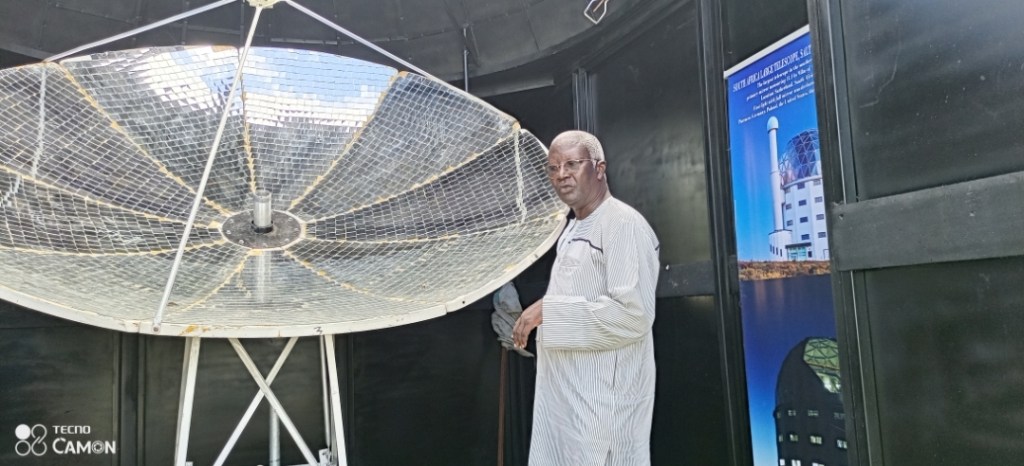
Zubairu at the site of one of his most ambitious projects – space observatory
Mr Zubairu leverages his position in the physics laboratory to continue his research and development in optical science and telescopic lenses, leading to the successful creation of 4x40mm Binoculars. Despite his achievements, Nigeria and other African countries cannot produce binoculars, a technical knowledge Zubairu demonstrated over three decades ago.
Zubairu finds it ironic that Nigeria still cannot produce basic instruments like binoculars, telescopes, and sniper lenses, despite how easy it is to do so. He remarked, “It is funny to note that until now, Nigeria does not produce basic instruments like binoculars, telescopes, and sniper lenses, even though it is very easy to do so.”
Mr Zubairu refused to let the Nigerian government’s cold attitude dampen his inner fires of creativity and research and continued exploring various astronomy fields using his locally fabricated lenses. He further improved his first binoculars, the 4x40mm ZB, and sent a letter to the then Chief of Army Staff, General Alwali Kazir. Impressed by his work, General Kazir invited him to present it before an army council at the Army headquarters.
During the presentation, Mr Zubairu showcased his capabilities and spoke about infrared technology. He explained the core components of infrared and how it could support the military in tackling the challenges of fighting at night. He further highlighted that they had the idea and skills to develop their infrared facility for rifles, binoculars, flying jets, and other long-range targeting weapons.
According to Mr Zubairu, the army council approved his proposal, and some funds were released to start work on night viewing instruments, including the infrared and light intensifier. However, with the appointment of General Ishaya Bamaiyi as the new Chief of Army Staff, the project was terminated, as he did not appreciate its significance.
Fortunately, General TL Ashei, the Chief of Army Policy and Plans at the time believed in the project and gave Mr. Zubairu a letter of referral to the Federal Ministry of Science and Technology, ensuring that the project did not die naturally. The late General Sam Momah, the Minister of Science and Technology at the time, was interested in the project and directed Mr Zubairu to proceed to the Science Equipment Development Institute (SEDI) in Enugu. He received a recommendation from the institution to the minister on the need to sponsor the project.”
After a few months, Mr Zubairu received approval for the project, and a cheque was issued. However, the cheque was made to SEDI, not Zubairu, with a cover letter stating that the funds were meant for him and not the institution. Mr Zubairu planned to work through NASENI, a federal government agency that oversees all centres involved in engineering projects.
Despite receiving the funds, Mr Zubairu faced several challenges during the project’s development. He was frustrated by SEDI’s lack of support. They did not engineer or produce the body for him, despite him designing the infrared device and light intensifiers and acquiring all the required lenses. Consequently, he wrote a report to inform the ministry of the setback, but they have not responded since then.
Mr Zubairu returned to his work at the University of Maiduguri, designing and fabricating prototypes of refracting astronomical telescopes and sniper telescopes for rifles. In 2004, he was introduced to Major General Edo Wande, the Director-General of the Defence Industry Company of Nigeria (DICON), who invited him to design and construct a prototype of a C2-sight for an 88mm mortar gun. Although Mr Zubairu submitted the prototype within four months, no further development occurred. His work was later featured at the 2004 NUC research exhibition in Abuja, and some military generals appreciated his work. However, upon returning to Maiduguri, he encountered military problems.
“After the exhibition, I returned to Maiduguri and was sought out by military intelligence operatives who had received a signal from their Director MI about my project. They wanted to see my snipers’ prototypes and had initially intended to harass me. However, after I visited the barracks and explained that universities worldwide teach all kinds of gadgets, military and civil, they became interested. Unfortunately, the General who had taken an interest in my work retired, and nothing came of it.
A shift to lunar telescoping
Mr Zubairu concluded that the Nigerian military was not interested in his work, despite his efforts to show them how his projects could help solve their non-ballistic hardware needs. Frustrated, he put his quest to design sniper rifle telescopes aside and shifted his focus to creating telescopes for lunar movement instead. His experience with the military taught him that critical projects often depend on the interest or passion of a single individual. Once that person is no longer in charge, the project dies because there is no institutional interest or framework to sustain it, according to Mr Zubairu.
Uncertain of his next steps, Mr Zubairu shifted his research focus toward designing telescopes for lunar movements. Through his work, he was able to calibrate a telescope that accurately monitors the moon’s movements, allowing him to create a calendar based on the Islamic lunar cycle.
After nine years of painstaking work, he could tabulate the calendar for a 33-year cycle. He had to enter each suggestion into the columns one by one manually, and by the time he reached the 33rd year, the suggestion returned exactly where he had started – this was the furthest he had gone in lunar research.
According to Mr Zubairu, his findings are original, which is why the Saudi Arabian journal, Astronomic, was interested in publishing them. Despite not receiving recognition in his home country, Mr Zubairu’s book is now available on Amazon’s online marketplace.
In the future, this newspaper will explore another ambitious project by Mr Zubairu in space observation science. This project is currently in progress at the UNIMAID Campus.
Once upon a time, there was a beautiful lake that was a haven for fishermen.
The locals would cast their nets and spend their days on the water, catching fish for their families and community.
The lake was a source of joy and sustenance for all who lived nearby and those who journeyed from afar.
But over time, things began to change. The fish in the lake began to disappear, and the fishermen struggled to make ends meet—no thanks to human interference and altering climate.
Desperation set in, and some turned to more extreme measures to survive.
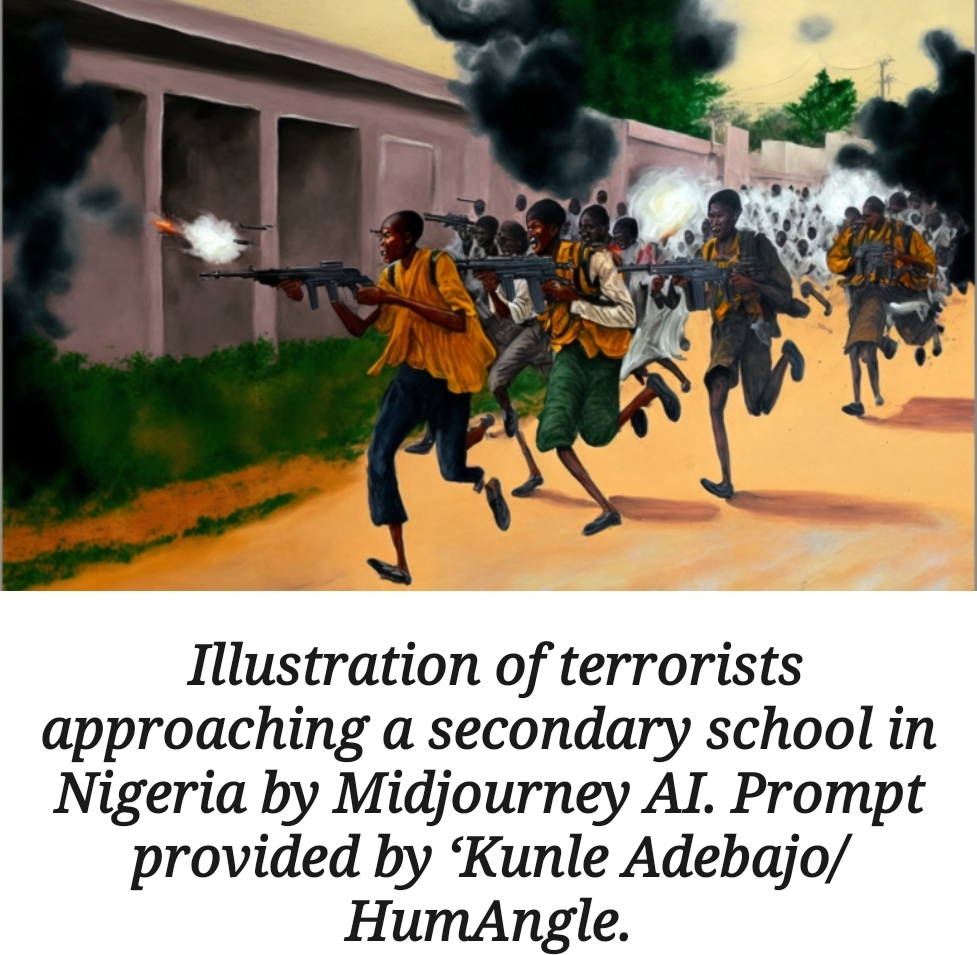
Suddenly, the lake became a breeding ground for terrorism. Where fishermen would cast their nets and drag out fish now become up a dragnet for violent extremism.
Extremist groups set up shops, using the area as a base to plan and carry out acts of violence. The peaceful hinterlands of Baga, Krenoa, Kauwa, Monguno, Malamfatori, Mobbar, Ajigin, Dikwa, Bama, Kondu’a, Gwoza, Mafa, Ka’a, and a host of others were suddenly plunged into chaos and fear, as no one felt safe anymore. Everyone fled.
The government and security forces stepped in to try and restore order, but it proved to be a difficult task. It is 14 years now. The terrorists are unyielding and have already gained a foothold and wielded significant power.
It seemed like the lake would forever be associated with fear and violence. Many Generals have come and gone, yet, the war still rages on. Sometimes hot, sometimes cold. But for each undulating temperature, lives are lost.
And so, the once-beautiful lake remained abandoned, no longer a significant source of fish but a grim reminder of how desperation and violence can take hold in even the most idyllic of surroundings.
Haruna, a seasoned journalist working in the Lake Chad region, is our guest writer.
The recent decision by the military authority at Operation Hadin Kai to selectively invite journalists to cover their operations is a concerning development in the fight against insurgency in Northeast Nigeria.
This decision, which has recently become a disturbing trend, goes against the spirit of civil-military cooperation and collaboration needed to succeed in ending the 14-year war on the shores of Lake Chad.
It is important to note that the media, regardless of their size, reach and capacity, have played critical roles in de-escalating the challenges faced by the military in the region. The media has helped to bring to light the atrocities committed by the insurgents, as well as the efforts of the military to combat them. This has helped to raise public awareness of the need to support the military in its efforts to end the insurgency.
Some critical events for reference in this piece are the recent inauguration of a military court martial, the recent visit of the Chief of Army Staff, Lt General Farouq Yahaya to the Theater during the Eid-elKabir celebration and the hand over and take over of the GOC at the 7-Division Nigerian army that took place on Sunday, 23 April.
By denying a section of journalists access to cover their operations, the military is effectively keeping critical information from the public. This is a dangerous development, as it could lead to misinformation and rumors which could undermine the efforts of the military. It is important for the public to have accurate and timely information on the progress of the military operations, and the media plays a crucial role in providing this information to the public.
Furthermore, the decision to selectively invite journalists to cover military operations could lead to mistrust between the military and the media. This could have far-reaching consequences, as a breakdown in civil-military cooperation could hinder efforts to end the insurgency.
I am particularly worried that this is happening at a time we felt we have long past this level. Until now, there had been a robust relationship built on national interest between the journalists and the military both at the Theater and the Divisional level.
It is imperative to note that since the days of General SK Usman, Col. Dole, Col.Sagir Musa, General Nwachukwu, and General Ado who were spokesmen of the Theater or the 7 Division at different times, issues like selective invitation were never recorded, until now.
The visit of a COAS to any part of Nigeria should, by default, be a newsworthy event to every journalist in that location. In such events policy and operational strategy pronouncements are made which must be reported. And this is even more important for journalists in northeast Nigeria.
The military should recognize the important role that the media plays in the fight against insurgency and should work to ensure that journalists are not excluded from covering their operations, especially now that we are edging towards the post insurgency era.
Keeping information from the media could have far-reaching consequences and could hinder efforts to end the insurgency.
I hope authorities at both Operation Hadin Kai and 7 Division NA take heed of this friendly call to attention and immediately shove a wedge on the wheels of this dangerous drift, before it gets out of hand.
IFAD’s investment of over $604.6 million in Nigeria’s agricultural sector between 2016 and 2023 is a significant contribution to addressing the challenges of food shortage in the country.
The program has provided support to over 5 million farmers across 28 states, creating employment opportunities for rural youths and supporting agribusiness hubs in Nigeria.
The recent two-day regional consultative workshop held by IFAD ahead of the 2024-2029 project was a commendable effort aimed at getting feedback from critical participants and target groups to improve the project. This shows that IFAD is committed to ensuring that its investments have a positive impact on the agricultural sector in Nigeria.
However, the impact of IFAD’s investment on hunger and commodity prices is somewhat difficult to measure. While the investment has undoubtedly improved the livelihoods of many farmers and created employment opportunities in rural areas, it may not have had a significant impact on the overall food security situation in the country. Nigeria still has one of the highest rates of food insecurity in the world, with millions of people suffering from hunger and malnutrition.
Yes. According to the latest (6 Mar 2023) report by the Food and Agriculture Organisation (FAO), it is projected that about 25.3 million people in Nigeria would face acute food insecurity during the June to August 2023 lean season. A quarterly report released by the global organisation shows that the figure projected is higher than the 19.45 million forecasts in 2022.
One of the reasons for this is the limited budget and programme of the Nigerian government on agriculture. Although the government has made efforts to increase its budget for agriculture, it is still relatively low compared to other African countries. The government’s flagship agricultural program, the Agricultural Transformation Agenda (ATA), has been criticized for being more focused on increasing agricultural production rather than addressing the root causes of food insecurity.
Another challenge that has affected the yields of farmers in Nigeria is the recent flooding that has occurred in many parts of the country. Flooding has destroyed crops, livestock, and infrastructure, leading to reduced yields and increased food prices. This has further exacerbated the food security situation in Nigeria, especially in rural areas where agriculture is the main source of income.
The Famine Early Warning System Network (FEWS NET) report has indicated that places like the northeast may have witnessed “lower levels of conflict which allowed displaced households to return to their area of origin, but many other households that “continue to be displaced, have low assets and difficulty engaging in typical livelihood activities due to the prolonged nature of the conflict.”
The FEWS Network added that many households are engaging in the ongoing agricultural season, “and while engagement in the season is expected to be above average, households will likely still face difficulty planting at pre-conflict levels due to low income and erosion of assets. As a result, Crisis (Integrated food security phase classification Phase 3) or worse outcomes are expected in these areas of the northeast through at least January 2023.”
The way forward for addressing the challenges of food insecurity in Nigeria is multifaceted. The Nigerian government needs to increase its budget for agriculture and focus on policies that address the root causes of food insecurity, such as poverty and inequality. IFAD and other development partners also need to continue investing in the agricultural sector in Nigeria, while ensuring that their investments are targeted at addressing the specific needs of the country.
Efforts should also be made to mitigate the impact of climate change, such as flooding, on the agricultural sector. This could involve the development of climate-resilient crops, irrigation systems, and infrastructure, as well as the promotion of sustainable farming practices.
In addition, there is a need for increased collaboration and coordination among stakeholders in the agricultural sector in Nigeria. This includes the government, development partners, farmers, and other actors in the value chain. By working together, they can identify and address the specific challenges facing the sector, and develop sustainable solutions that benefit all stakeholders.
In summary, it is the informed opinion of BNB-Online that IFAD’s investment in Nigeria’s agricultural sector is a welcome development and has provided significant support to millions of farmers. However, more needs to be done to address the root causes of food insecurity in Nigeria, including increasing the government’s budget for agriculture, addressing the impact of climate change on the sector, and promoting collaboration among stakeholders. With sustained efforts and investments, it is possible to create a more sustainable and food-secure future for Nigeria, in line with SDG goals 1, 2, 13 and 17.
Whoever wins the February 2023 presidential election in Nigeria would have done so chiefly because of, or, in spite of, Mamman Daura, the 83-year-old senescent nephew of President Mohammadu Buhari. This might seem an ostentatious claim or an inflationary attribution of power to a man whose only claim to it, in the present circumstances, is that the president is his younger nephew. Yet, this is an open secret among those with a deep knowledge of the current struggle for the presidency and the nature of power under the Muhammadu Buhari administration. But most people are not eager to discuss the matter directly in public, either because of discretion and/or fear of the ‘almighty’ Daura.
However, between the candidate of the ruling party, Governor Bola Tinubu, and the candidate of the main opposition party, Vice President Atiku Abubakar, there is a clear recognition of the central role that Daura is playing and would play regarding who becomes the next president of Nigeria. For the former Lagos Governor, this could not have come as a surprise. He recognizes that the presidency, which has been, for the most part of the last eight years, effectively under the control of Daura, is being mobilized one way or the other against him. Perhaps more than any other person, it is Daura who has ensured that Tinubu would not reap, as ‘designed,’ the full benefits of his total investment in making Buhari president.
When Buhari declared upon acceding to power that he “belonged to nobody,” it was in part a ventriloquist shot from his nephew in the direction of the man who had assumed that he would be the power behind the throne. At the centre of the process that eventuated in the much analyzed “outburst” of the Jagaban at Abeokuta, when he let it be known to the world that “emi lo kan” (“it is my turn”; or “I am next”) was Daura’s machinations to ensure that Tinubu would not be the presidential candidate of the ruling party, let alone succeed Buhari.
Those who thought that the outburst sealed Tinubu’s fate were to realize later that the man has not governed Nigeria’s most important state either directly or by proxy for 22 years for nothing. By taking the battle to Buhari and his handlers, the Abeokuta wager turned out to be a courageous venture that helped to stop Daura and his constituents in their tracks – and thus, made a mockery of their desperate bid to hand over the party’s ticket to the Senate President, Ahmad Lawan. If Tinubu’s spirited survival of the President Olusegun Obasanjo-led “tsunami” that swept all the other AD governors out of power in 2003 did not convince most people about the man’s political genius, how he retrieved every single South-western states in installments from the opposition and ended up installing Buhari as president in concert with other forces, should have confirmed his unusual political potency. No doubt, that potency was at its most vulnerable when he formally joined the bid to win the APC ticket – and remains so now that he goes for the ultimate prize. Yet, it was also the point at which all of his accumulated political assets had to be mobilized in the service of his life-long ambition.
However, it must be noted that it was not until Tinubu encountered Daura that he experienced his first major sustained checkmate in the politics of the Fourth Republic. The man who has since become the most valuable player in Yoruba politics was dealing with an unusual adversary in Daura. None of those that Tinubu had had to wrestle with since 1998 – that is, when he started his campaign to be the governor of Lagos State – possessed the strategic advantage of a combination of stealth, reticence and unaccountable power as Daura does.
Cerebral, generous but taciturn, Mamman Daura, the fascinating power-monger par excellence, and the former newspaper editor and manager seems resolved to terminate Tinubu’s political ambition on the eve of the latter’s ultimate home run.
As the only surviving member of the triumvirate that can lay claim to almost unbridled influence over Muhammadu Buhari, Daura is well-placed to either hinder or advance the ambition of the two leading presidential contenders, Bola Tinubu and Atiku Abubakar in the February 2023 presidential election. And he is not shy to use his leverage in tipping the scale against the former Lagos governor.
With the passing of the two other closest people to Buhari, that is, the late Emir of Borgu, Haliru Dantoro Kitoro III, who died in October 2015, barely five months after Buhari came to office, and Liman Ciroma, Nigeria’s first qualified archaeologist (who the Guardian of London described in an obituary in 2014 as a “a fine public servant” who was ‘courteous, considerate and generous”), the Daura-born presidential nephew has had no counter weight since 2015. Had he lived well past 2015, the late Emir, who was singularly responsible for brokering the rapprochement that made the “political marriage” of Buhari (CPC) and Tinubu (ACN) possible, would not have allowed the deliberate distancing between the two that followed Buhari’s ascendancy to power.
The first lady, Aisha Halilu Buhari, could not replace the late Borgu monarch. Her intrepid effort to stand up to Daura ended in semi-exile in Dubai, as her husband declared that her place was in the “other room.” But the resolute woman is back with vengeance. Now, as we move towards February 25, she wants to ensure that Daura’s reign would end with that of his kin.
It was as if fate was conspiring against Tinubu and Nigeria in the passing of the Emir of Borgu and Ciroma. Not a few around Buhari believe that his administration would not have come to this sorry pass if the two had lived longer. At least, Daura would not have had a debilitating unchecked leverage over Buhari in the last eight years, which most people believe to be a tragedy for Nigeria. These two late gentlemen, not having to be around the Villa like Daura, would have provided some other avenues of reaching Buhari in moderating the excesses of those who have determined the terrible trajectory of his headship of the Nigerian state. But those who know Daura well still wonder how such an otherwise fine mind and quiet soul had turned into one of the most consequential and hindering power mongers in Nigeria’s history.
Those in this category even insist that Daura’s influence on Buhari and his leverage in this government have been overstated. They would add that if the country were to have been differently organized, the suave, lettered and cultivated man would have been the president and his not similarly lettered uncle would have been his aide.
But the reality of Daura’s influence and imprint on the most devastating actions and inaction of this administration are too glaring. Take the way he has preserved and protected the tragedy that answers to the tag of the Governor of the Central Bank, Godwin Emefiele – even encouraging, as many believed, the latter to run for the presidency, and keeping Emefiele in office after that abortive ambition. How could such a man who clearly had a conflict of interest be allowed to not only continue in office, but claim to be changing the colour of the currency in order to affect the outcome of the presidential election? Imagine the untold suffering of the poor masses of the country that this ill-considered measure has caused.
Whatever you think of the leading contenders for the presidency, his adversaries would insist, there are fewer stronger examples of Daura’s gamble with the fate of the nation and of democracy than the recent moves by edgy fifth columnists of all stripes.
For those still wondering what happened to the candidness of ‘Candido,’ the famed masked newspaper columnist of the defunct New Nigerian: it is power. This is what power does to human beings, especially when they assume that they have Power with a capital “P” – though all that any of us can have, even in the best of circumstances, is only power with a small “p.” No one can have Power. It eludes even the most deranged among us throughout human history. Yet, that does not stop some people from attempt to play God.
Will Daura’s role as the “unseen god of the Aso Rock Villa” in the last eight years be confirmed or repudiated in the next presidential election? We have only a few weeks to find out. But whatever happens, Daura would no doubt have done his best to determine who would (not) be our next president.
*Adebanwi, author of Yoruba Elites and Ethnic Politics in Nigeria, is the Presidential Penn Compact Professor of Africana Studies at the University of Pennsylvania, USA.
Humangle has published a heartrenting story about an aged mother whose son was “wrongly” picked and detained by the military as a Boko Haram suspect embarked on a lone mission to secure his freedom. But her effort continued to hit the rocks as she was ripped off several times by officials. Ten years later, her grandson, who was born three months after her son was taken, has now joined her in the fight for justice.
ONCE upon a time, 11 years ago, during the early years of Boko Haram, a young man in Maiduguri, Northeast Nigeria, set out to join the early morning congregational prayer at a mosque not far from his home in Bulabulingaranam.
Buluabulingaranam used to be the den of Boko Haram terrorists when the terrorists reigned supreme in the township of Maiduguri, the Borno state capital. The suburb was once a no-go area to the military.
It usually takes about 20 minutes to conclude the prayers, and everyone returns home to prepare for the day’s task. But that was not the case for Mustapha. It has been over a decade since he left home on that fateful morning.
When the Imam announced the salutation to end the prayer, little did the congregants know that a deployment of military troops had surrounded the mosque.
Every worshiper that stepped out of the mosque was rounded up and asked to sit on the dusty floor outside. Later, other male neighbourhood residents were equally fished out by soldiers who were moving from house to house and made to join the gathering of the apprehended.
Anyone who dared to challenge the soldiers’ actions got the butt of the AK-47 crashing down on his head or shoulder. So, they allowed wisdom to prevail by quietly waiting to see what the soldiers wanted from them again.
Later, the soldiers sorted out the elderly males and asked them to go home. In contrast, some of the young were labelled Boko Haram accomplices responsible for a recent attack on a nearby military post.
It was Mustapha’s turn to be interrogated. The soldiers marched him, at gunpoint, to his house, where he lived with his then-newlywed wife, Nafisat.
Mustapha was made to open the gate to his two-bedroom bungalow, and the soldiers ransacked his house, searching for hidden weapons or anything that may link him with ongoing violence in the city.
“They found nothing, and then one of the commanders told the soldiers to take him away, while my husband kept begging them to free him because he is not a member of Boko Haram,” Nafisat recalled.
The soldier dragged Mustapha out of the house even as his wife held onto him and begged them to free her husband. She had to let him go after one of the soldiers smacked her.
That was the last time his wife, six months into a pregnancy that would later produce her only child, would ever see him again.
Searching for Mustapha
HAJJA GANA, Mustapha’s mother, would later be informed about the arrest of her first son.
Known as an activist and labour unionist during her days in the civil service, Comrade Hajja Gana began the fight to free her first son, whom she swore was never a member of Boko Haram. She did not anticipate that her quest to free her son would last for ten years.
Like many other suspects of Boko Haram terrorism, the soldiers took Mustapha and others to the Giwa Barracks military detention facility in Maiduguri.
His mother would later trace him there, where she practically paid her way through some crooked soldiers to see her son.
“About three weeks after his arrest, I saw my son at the Giwa Barracks,” she said. “A senior military officer, a Colonel, asked that he be brought out of the cell.”
“My son begged me to do everything I could to ensure his release from the detention facility. He said, Mama, help me get out of here because this place is not a good place. The soldiers told us it would require a lot of money.”
Mustapha, who used to trade wholesale goods that he usually bought from Kano and sold to retail shops in Maiduguri, gave his mother a list of his business partners whom he said owed him money. He wanted her to get that money and use part of it to secure his release.
Extortion
Hajja Gana said she managed to retrieve her son’s money from his business partners and used it to get a lawyer and also pay some of the soldiers who claimed they could help her secure his release.
“I got all the money, but it was not enough. I had to sell my personal effects, my gold jewellery pieces, my savings, my landed property, and anything valuable to raise money.
“The soldiers kept asking me for money with the promise to help me bring him out. They told me my son would never be freed alive unless they sneaked him out. That people die every day in the cell, and they would include my son among the corpses to be evacuated to the mortuary so that I could go there and take him home.
The poor woman estimates that up to N2 million ($4,800) had been extorted from her so far.
“There was a time they asked me to provide N25,000 ($50) for them to service and fill up the tank of one of their vans so that they could sneak him out of Maiduguri to Damaturu, Yobe State, where I would travel ahead of time and receive, but on the condition that I don’t let him return to Borno State. I gave them the money and rushed down to Damaturu, where I waited all day, but neither my son nor the soldiers who collected my money showed up.
“Sometimes, they would call me and ask for money to enable them to check for his file, or they would call and tell me that one of their bosses wanted to see me, and when we met for a rendezvous, they would make all kinds of promises to me and then ask for money.”
With time, she realised she was being taken advantage of.
“Years later, the Giwa Barrack was attacked by Boko Haram terrorists who broke into the detention facility, and I never saw or heard from my son again.”
Unknown to Hajja Gana, the military had transferred her son and other suspects to the Wawa Cantonment of the Nigerian Army in Kainji, North-central Nigeria.
It took five years for Mustapha’s family to learn about this transfer.
Life Without Mustapha
THREE months after soldiers picked him up, Mustapha’s wife gave birth to their first and only child, Abdulkarim.
According to her mother-in-law, Nafisa continues to live with her husband’s family because she has never given up hope of seeing him again.
Abdulkarim and his mother, Nafisat, look at Mustapha’s old picture from a mobile device in this photo. Photo credit: Abdulkareem/ HumAngle.
Supported by her husband’s mother, young Nafisat weaned her child, enrolled in the university, and eventually graduated. Her son, Mustapha, had to be fed with “lies” about his father’s whereabouts.
“We usually tell him that his father has traveled to Saudi Arabia and will soon be back,” Nafisat said.
But as the boy gradually matured, his demand for his father shifted from a child’s expectations of beautiful gifts from his daddy, who would “soon” return, to ask his mother to allow him to speak to his daddy through her mobile phone.
“Being a member of the women’s civil society network known as Jire Dole, I had the cause to take my grandson to some of our advocacy outings and meetings just to make a statement about how it was wrong to wrongly arrest and detain a people on false accusations of being Boko Haram terrorists, yet you don’t have any evidence to prosecute,” she said.
Those public engagements with his grandmother had inadvertently exposed young Abdulkarim to finding the truth about his father’s whereabouts.
“So, one night, he came to me and asked why the soldiers were detaining his father in the military facility, and I told him that the soldiers lied against him to keep him there,” his mother, Nafisat, said.
“Since then, Abdulkarim had resolved to be a soldier so that he would one day free his father.”
But he never gets tired of writing letters to the military commander on the need to free his father, whom he has never seen since birth.
“Each time I was to go out to attend any public function, Abdulkarim would ask if I was going to see any military commander there. If my answer were yes, he would run to get a piece of paper and pen and then scribble a letter for me to deliver to the military commander.
A copy of Abdulkarim’s letter to the military commander he believes is holding his father in detention. Photo credit: Abdulkareem/HumAngle.
“I was very emotional the first day he handed me that piece of paper, and I cried all day,” Hajja Gana said.
“It was then that I came to realise that it has already been ten years, and this boy has grown to be able to write a letter; yet he has never set eyes on his father, whom he only appreciates from what we told him and from viewing the old pictures we have of him at home.
“Abdulkarim is now in class 6, preparing very soon to go to secondary school, and I thank God for his life and the love and support I enjoyed from people who helped my family ensure that he goes to school.
“My heart bleeds whenever he says he wants to become a soldier. A child who was just six months old in his mother’s womb when his father was arrested and detained has joined us in seeking justice for his dear father ten years later,” she said in tears.
Abdulkarim’s Letter
AT ten, Abdulkarim’s letter and how he expressed himself defined his personality as a child who knows what he wants now and what he would like to do in the future.
His legibly scripted short letter reads:
“Dear Sir,
How are you and how about your family?
Sir, please, I whanted [want] to see my father, sir. I (am) Abdulkarim Mustapha.
I am ten years old.
Since my mother born to me, I did not see my father up to now.
Please, sir, help me to see my father.”
Speaking with this reporter, Abdulkarim shared his dream of becoming a military officer someday so that he could be able to free his father from wrongful detention.
Though Abdulkarim’s dream of joining the military to rescue his father may seem a far-fetched mission, the primary six pupils said he would continue to write his letter to the military authority until God answers his prayers someday.
*You are reading this story at no cost, but you can only support us continue this good work if you LIKE, COMMENT and SHARE this report by clicking the handdles below👇
Extracted from Natasha Chilambo’s Article, “Reimagining Health to Counter Violent Extremism”
The Boko Haram conflict in north-east Nigeria has created a situation of acute and enduring humanitarian need over the past decade. Boko Haram has attacked both government forces and civilians, carried out suicide attacks, and mass kidnappings.
An estimated 41 thousand people have died, with more than three million people displaced by this conflict.
A narrow definition and operationalization of peace and security limits the breadth of the responses to conflict. State-sanctioned solutions have typically been militarized yet yielded limited success.
We have seen that simply eradicating the leader of this insurgency does not uproot an ideology that forms the basis for harm at this large a scale. An armed response is insufficient. Therefore, all stakeholders need to expand and reconfigure what constitutes a comprehensive response to the problems presented by Boko Haram.
An appreciation of the relationship between trauma and violent extremism offers a vital key to a fuller approach to preventing and countering violent extremism.
Trauma, and ill mental health is rarely a consideration of insecurity. By centring trauma in managing violent extremism, we are made to consider the vulnerabilities of communities in greater detail and with greater care.
This lens offers more clues about how violent extremism manifests and is maintained because it requires the blurring of disciplinary confines and authentic interdisciplinary work. For example, a peacebuilding intervention would need to consider the psychological wellbeing of communities they seek to engage with—trauma may be a barrier to reconciliation.
Using the trauma-violent extremism lens forces us to simultaneously expand our notions of health, as well as peace and security. Looking through this lens challenges the convenient myths of psychiatric universalism and perceiving violent extremism as a phenomenon requiring a predominantly militarized response. Health as a bridge to peace is a useful framework that illustrates the richness of having expansive notions of health and peace and security.
In the Neem Foundation’s Counselling on Wheels programme, interventions are designed and delivered predominantly by academics and practitioners from the North East. Alongside these interventions, there is ongoing interdisciplinary research work capturing vast amounts of data.
A 2020 evaluation found that the Counselling on Wheels programme engaged close to two thousand people from a range of stakeholder groups, and over ten thousand people from more than forty local communities through psychotherapy interventions. The evidence demonstrated that the Counselling on Wheels programmes significantly reduced people’s mental distress as well as vulnerability to violent extremism.
This model offers an entry point towards a decolonial approach to global mental health and peace and security. The researchers and practitioners within Neem reflect the diverse socio-political and economic backgrounds of the communities they serve, thus reducing the epistemic and experiential gap. Neem challenges existing power imbalances in knowledge production and the practices that emerge from it by decentring hegemonic Western definitions of mental distress and insecurity. Instead, the organization reconfigures the definitions of health and insecurity by expanding them to include the structural factors at play. Health, therefore, ceases to merely be a biological phenomenon, and peace and security an issue that is dealt with simply by adopting militaristic approaches. This is exciting, but there is still some way to go in the aspiration of using health as a bridge to peace.
While Counselling on Wheels boasts delivering psychosocial support and counselling services to over 31 thousand beneficiaries in Borno State, why isn’t the government relying on it? Perhaps this is to do with legitimacy. This programme sits between the tension of forming new ways whilst having to exists within paradigms that dictate a particular discourse and praxis. Counselling on Wheels must prove its legitimacy to the very systems it seeks to disrupt. Inherently, this requires compromise. For example, to capture the trauma of the affected communities, the counsellors may rely on psychological metric tools that were designed in the West. Whist this will yield data that demonstrates the scope of the problem, and the ways in which Counselling on Wheels has alleviated it, it risks reinforcing the very dominant framings of mental health it challenges. This has implications on the impact on policy and funding.
Similarly, what are peace metrics beyond a lack of armed conflict – how will we know that Boko Haram is defeated? Different ways of understanding and sustaining peace will be needed to move beyond militarized peace and security.
Organizations must develop an imagination and a maturity that helps them to discern which tools to use to dismantle the master’s house.
*The content of this article and it’s message are the opinion of the author and does not reflect the editorial view of Bay-6 News Online.
The Buni Yadi massacre of 2014 was done methodically by the Boko Haram terror group. As teenage boys slept in their school hostel, the insurgents threw balls of fire under their bunk beds. In this series, we tell the stories from the perspective of staff, parents of the deceased boys, and one boy who survived.
“It will take a cinematographer’s eyes. Mine will not do, I admit. And she will need a button that makes and unmakes memories.”— How Memory Unmakes Us, Gbenga Adesina.
When Malam Umar crept out of hiding the next morning, his head dirtied and bloody after grazing it against the culvert he had hid under for hours, he found the lifeless bodies of students he had taught and known for years strewn about the compound.
Some of them had been slaughtered like livestock, the blood still all over their necks; others had burned to death, their hands still hung in the air from when they tried to writhe their way out of the flames. Others had bullet wounds all over their body.
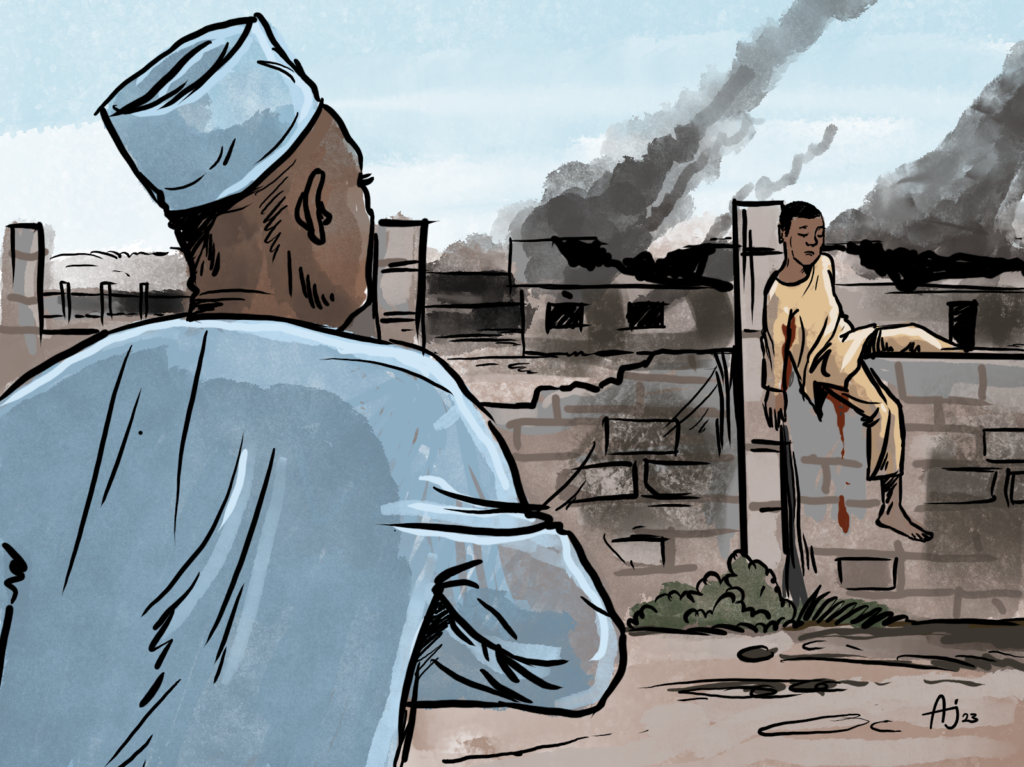
He advanced farther into the compound, his entire body engulfed with a blend of terror and grief. He saw a boy, perhaps 10 or 11, sitting at a gate entrance, one leg out of the premises, the other inside. The boy looked like he had been trying to jump over but, when he found himself sitting at the entrance, decided to just stay there. It was Umar’s first and only glimpse of hope that day.
Umar and his companion rushed to the boy to hold him, and it was only then that they saw the bullet hole in his body and realised the boy had not slept off, nor was he merely resting. He was dead. He had been shot while attempting to leap out.
There are many things Umar found unforgivable about that night of the Buni Yadi massacre. From his 19-year-old daughter, who sustained severe burn injuries, to the sight of the bodies of dead children strewn about the school, but the image of the 10-year-old boy is what has haunted him the most in the years that followed.
Malam Umar in Potiskum, Northeast Nigeria. Photo: Hauwa Shaffii Nuhu/HumAngle.
“He was just a boy,” he tells me one November afternoon in his office in Potiskum, Northeast Nigeria. And even now, the pain is evident in his eyes. He looks as though he is watching the boy again.
“He was just a boy,” he says again.
“Very horrible. He was in JSS1. What could he have known about anything? About school or government or terrorism? What concerned that little boy with all that? He did not deserve that.”
The Boko Haram insurgency, which had erupted five years before, did not care about the boy’s age or innocence. In their anti-school campaign, they had stormed the school the night before in trucks and massacred at least 29 teenage schoolboys, before setting every building in the compound on fire. Today it is known as the Buni Yadi Massacre. The 10-year-old boy and all the other boys who were killed are remembered as the Buni Yadi heroes.
As Umar spoke about the events of that day, I was reminded at intervals of lines from a poem by the Nigerian-born poet, Gbenga Adesina, that appears in his chapbook of poetry. In the poem How Memory Unmakes Us, Adesina imagines how a filmmaker might record the scene of the Buni Yadi massacre and present the horrors to the world. He writes: “We are trying to pause the camera now, bidding the cinematographer to please press the button that unmakes memories.”
The Buni Yadi massacre has slipped under the consciousness of many Nigerians. Media reports that were later done about it got many of the details mixed up; some said 29 boys were killed. Others said 59. Some even said the girls had been abducted. Survivors feel it has not received the required amount of attention and investigation for reasons that remain unclear.
Many of the people I spoke to about the attack said they were speaking about it to the media for the first time.
Illustration. Akila Jibrin/HumAngle.
Feb. 24, 2014
The year the Abubakar Shekau-led Boko Haram stormed the Federal Government College Buni Yadi and slaughtered teenage schoolboys for daring to go to school, there had been a water problem in the town.
Every evening, residents of the staff quarters in the school would file out to the reservoir that stood in front of the principal’s house to fetch water to store in their houses for the next day. On the evening of the attack, they did the same.
When Umar and his family settled back inside their house in the quarters, as he attempted to drift off to sleep, he began to hear what sounded like a commotion from a distance. He was not immediately sure what was happening. Shortly after the commotion started, he heard the collective voices of men shouting Allahu Akbar. A Muslim himself, he knew that Muslims exclaim that way in shock, joy, or even grief. And so, even then he did not guess what was happening. It was, at best, a celebration and, at worst, a religious crisis.
Then, the rapid sounds of gunshots tore through the night, and he knew then they were under attack.
“I said to myself, ‘the boys’ have come today.”
The staff had spent the previous weeks in tension over the security of the school. It was the year that the terror group, whose existence was centred around an ideology that opposed ‘Western education’ among other things, had carried out many attacks on schools. In fact, not long before, they had attacked a nearby college of agriculture.
The terror group had already wreaked havoc in neighbouring Borno state, where thousands of people were being displaced by the violence from their homes in places like Boboshe, Kirawa, Nguro Soye, and Bama. That year and the year after, the insurgency reached its peak. In 2014 alone, attacks, including bomb detonations, were recorded in major locations like mosques and markets in Jos, Maiduguri, and Kano. Later in the year, they would carry out hostage kidnappings, such as the Chibok abduction of over 200 schoolgirls, catching the attention of the world.
As insecurity loomed over the entire region and seemed to be drawing nearer to Buni Yadi, teachers held countless meetings with the school principal, asking him to consider either closing down the school or relocating it. They suggested moving to the state capital, merging with another school. They feared they were a natural target for Boko Haram. The principal assured them always that there was no need to worry, that he was in constant communication with the military “and they were on top of the situation.” The man had complete confidence in the efforts of the troops, former staff told me. Sometimes, people in the school heard from outsiders that Boko Haram terrorists were attacking a nearby town. Fearing that the school was the next target, both students and staff would all flee into the bush for days. Students whose families lived nearby ran to their homes to stay for a few days before returning to school.
The school was no longer comfortable for them.
When Umar heard the gunshots, he knew he had to run. Once the insurgents were done with the students, they would come down to the staff quarters. And while he was confident that they would not harm his wife and daughters, he was sure they would kill him. He explained this to his family.
“We were merely 500 metres away from the boys’ hostel. My wife said no when I said I was leaving, she said I should not go. I said they would kill me if they came and met me,” so he left.
His wife would later tell him that when the terrorists made their way to the house, they asked if there were any men in the house.
In the pitch dark of the night, he struggled to find his way around the compound. At some point, he found himself sitting under a culvert that had been constructed a little distance from the staff quarters. From there, he heard the rapid gunshots in the boys’ hostel as the massacre happened.
Illustration. Akila Jibrin/HumAngle.
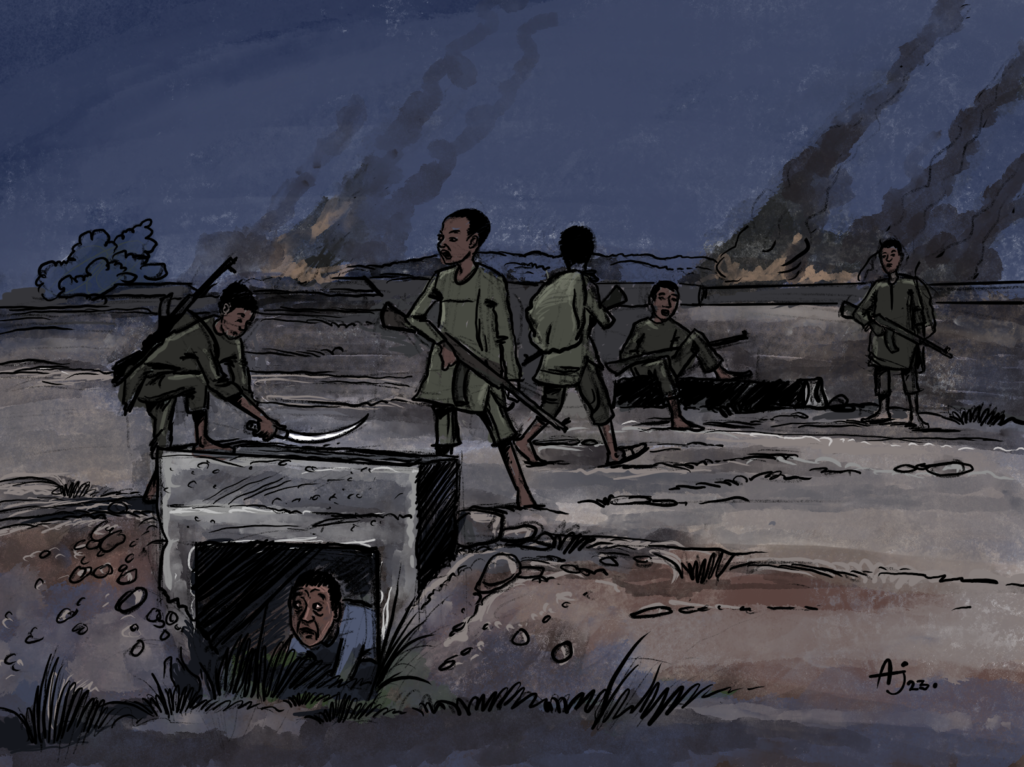
Shortly after, some of the insurgents made their way to the surface atop the culvert he was hiding under, and it was then that he got a view of them. What he saw shocked him.
“Many of them were just boys fa,” he says. “They were very little boys, some as young as 13 or 14. One of them held a rifle, he looked like if I held him, he would just break in my hands. And they were all wearing camouflage. Dressed like members of the army.” Because they had already set fire to the buildings, the place was somewhat illuminated enough for him to see them from where he was hiding.
He tried to listen in on their conversations, but they spoke mostly in Kanuri, a Borno language he did not understand. Suddenly, one of them took his knife and began to sharpen it against the surface of where they were sitting, all the while chatting with his companions.
That would come to mind hours later when Umar saw some of the bodies of the slaughtered children.
From the conversations Umar did manage to make out, he learned that the boys did not know where they were. Some argued that they were in Maiduguri, some thought they were in Damaturu, and others thought they were in Buni Yadi.
“Maybe they were not told exactly where they were going. They were only told they would be going for Jihad,” Malam Umar says.
Most of the boys had so much load on their backs, though Umar could not tell what exactly was in the luggage. He remembers that it was so heavy that some of them walked with difficulty. They stormed the principal’s residence and began to loot the things inside it, loading them on the vehicles parked outside. The principal, fortunately, had been out of town.
When they finished loading the vehicles, they realised they could not move them since they did not have the keys. In frustration, they set fire to the vehicles and all the things they loaded inside them.
When the day broke, even after the terrorists left, Umar could still hear the sound of burning buildings collapsing under the weight of fire.
“They set fire to everything. Even the firewood that was just outside, the trees, everything. They set fire to everything.”
When he finally found the courage to escape hiding, he saw two young girls in the distance. At first, he thought it was the terrorists, and he mused to himself that after all the time he had spent in hiding, he would now come face to face with them. But soon he realised they were students.
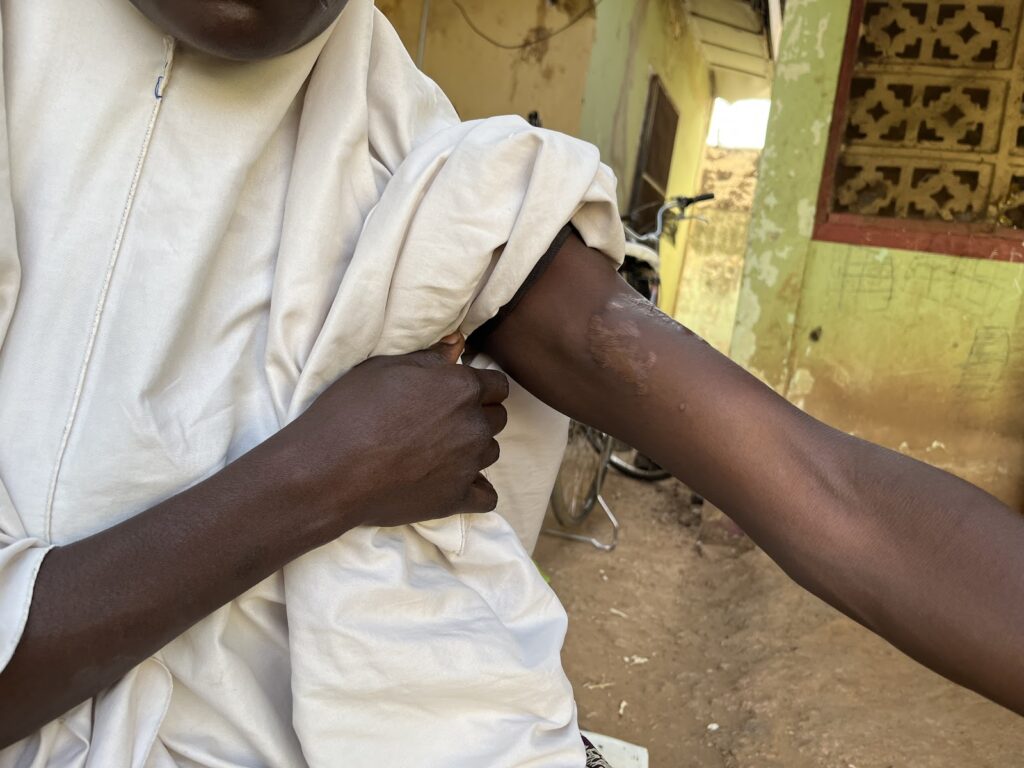
The first thing he did was to return to his family in the staff quarters to ensure they were okay. They were not. As he had first feared, the terrorists had found their way to the quarters after they were done in the boys’ hostel and set fire to houses. His house was no different. They had set fire to the house while his wife and daughters were in it. They all survived by finding their way out before it eventually ate its way through the entire building, but one of his daughters was caught in it longer than everyone. She sustained severe burns across her thighs, chest, and arms. Habiba
Habibashows the burns on her hand. Photo: Hauwa Shaffii Nuhu/HumAngle.
But Umar did not know this at the time. He had merely made sure they were alive and complete before hurrying off to the hostels to check on the boys. By then, residents of the town who lived nearby had begun to filter into the school, as well as some staff who survived. They all rushed to the hostel.
“What we saw when we got there was a litter of dead bodies. On the floor, on the walls, everywhere.”
“But there are no boys now. Only ash and screams and the flailing of arms.” — How Memory Unmakes Us, Gbenga Adesina.
Aftermath
The Buni Yadi massacre was done methodically. As the boys slept in their hostel, a section of the insurgents threw balls of fire under their bunk beds. That way, by the time they awoke or when the heat got to them, they would be jumping into the fire if they jumped off the beds.
As the children shouted for their lives as they burned, the terrorists taunted them. ‘Where are your soldiers? Let them come and rescue you.’
Some of them then stood outside windows, guns in hand, and gunned-down boys who tried to scale through the windows.
In this way, there were very few survivors.
“One would find up to five or six dead bodies outside one window. As they tried to jump out, they were being shot.”
When the military arrived at the scene after the attack, grieving staff of the school, angered by the slow response, asked where they were when they needed them the most. They responded that nobody had reported the attack to them while it happened. The response made many realise that the assurances they used to receive, that the military was on top of the situation, carrying out surveillance in their armoured tanks around the school every night to secure them, were false.
“Because if they had been truly doing that, they would have been aware of the attack. How could they have expected us to come to their barracks during the attack to report? The statement angered so many people that they nearly lynched the officer who made it,” a source who preferred to be unnamed said.
Soon, parents started to troop into the school to search for their sons after the news began to spread. On entering the school, they would find the dead bodies of the children, and many collapsed at the gory sight. Finally, after some time, the bodies were taken to the hospital and the mortuary, and those who were alive but wounded were taken into the emergency wards of the hospital for treatment.
Still, there were parents who did not hear about the attack for many hours because of the poor network connectivity in areas where the insurgents operated in those years.
Umar went along to the hospital with the bodies of his students. While there, news reached him that his own daughter back in the staff quarters was not well, so he hurried back to the school to meet his family. His daughter, Habiba, 19 at the time, was severely burnt.
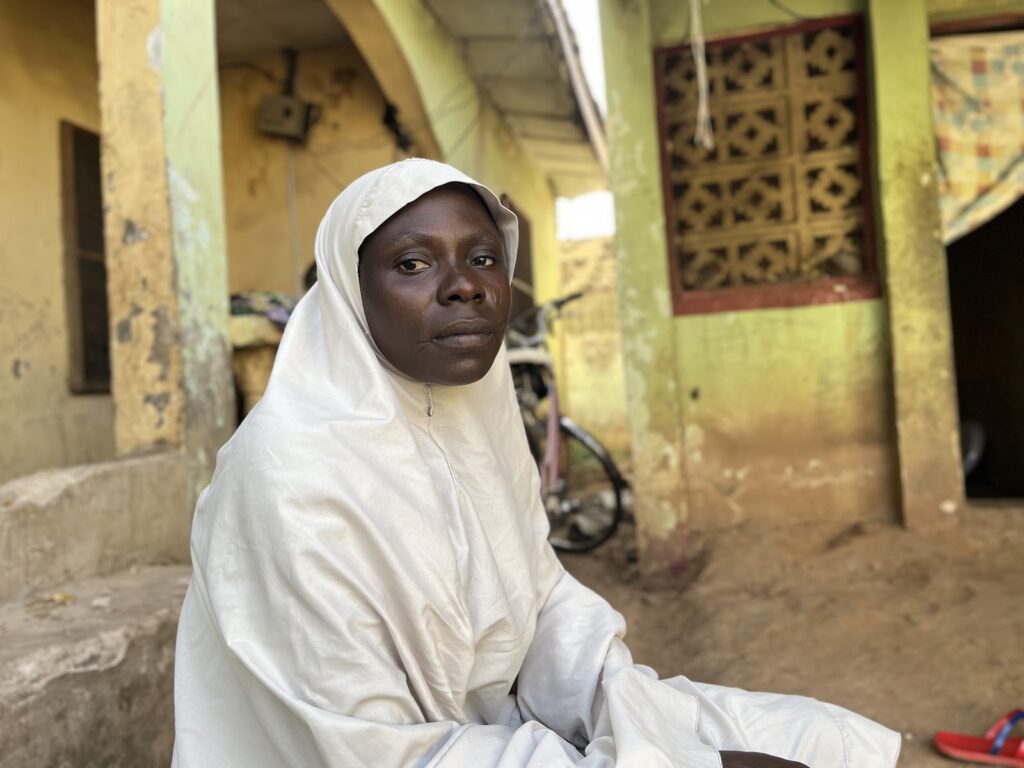
Habiba is now married with two kids. Photo: Hauwa Shaffii Nuhu/HumAngle.
She was lying down on the bare floor. He asked if she could sit properly, but she groaned that she could not. He was unsure how to proceed after that.
There were no vehicles left within the premises since they had all either been burnt or already used to convey the dead to the hospital.
“We had to look for a push-push [a trolley for water kegs] to convey her and others to the hospital,” he recalls.
Some of his other children could no longer see well due to the smoke they had to breathe in and be immersed in before they could break out of the building.
Luckily, treatment for them all at the hospital was free.
“At that time, the policy was that anyone in Yobe who was admitted to the emergency unit would be treated free of charge. The then governor, Geidam, had also directed all survivors of the attack to be treated for free.”
Not long after the attack, Umar moved his family away from Buni Yadi to Potiskum, Yobe state. The trauma was severe, and his residence had been burnt anyway. They also knew that the town had become more vulnerable to attacks. They turned out to be right because, not long after, the town fell to Boko Haram.
A persistent memory
When Malam Umar sat huddled and in hiding long after the insurgents had gone, he thought it would be an unending night. But after hours of hiding, after he had heard them driving away, silence slowly returned.
Then, he started to hear the call to prayer from far away.
The adhan came to Umar as a shock. Because he saw, then, that life was going on all over the world beyond that school compound, beyond the deaths and tragedy and horrors of the night. And that shocked him.
How was it that another day had come, and people in the next town could go about their lives?
“After all these things that just happened?”
Adesina’s poem ends with lines that echo Umar’s bewilderment.
“The unbelievable fact of history that the sun came out later that day.”
Hauwa Shaffii Nuhu is HumAngle’s Managing editor, and according to the newspaper she has her by-lines in several international publications and is a recipient of several fellowships and an award.
Kindly help us to grow by liking and sharing this story using the handles below👇






 Bay States News